
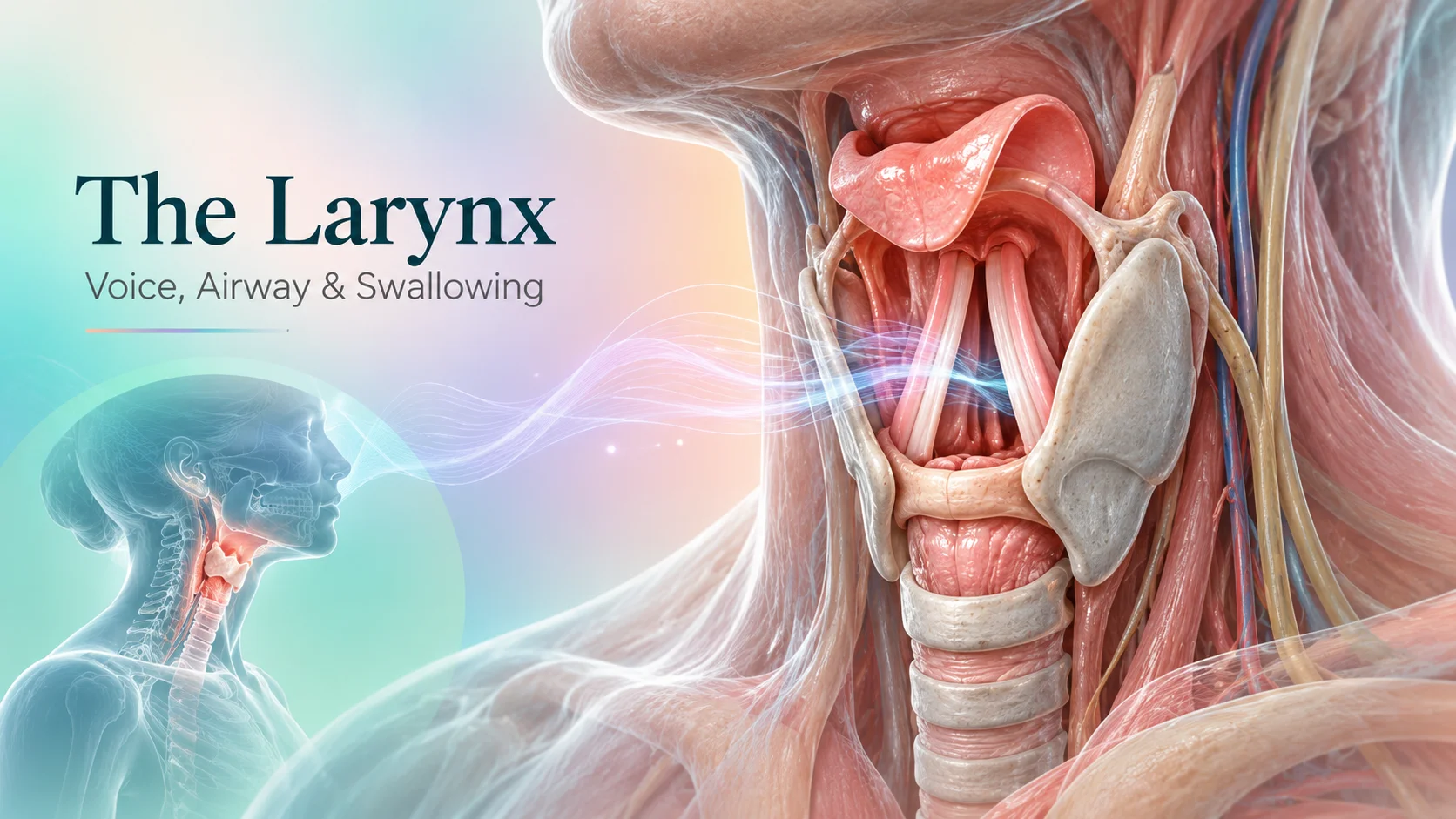
The larynx, commonly known as the voice box, is a structure located in the neck, at the top of the trachea. It serves two essential functions: protecting the airway during swallowing and producing the sound used in speech.
Protecting the Airway
One of the larynx's most critical jobs has nothing to do with sound at all. During swallowing, the larynx rises and a flap of cartilage called the epiglottis folds down over its opening, sealing off the airway so that food and liquid are directed into the esophagus rather than the windpipe. The vocal cords themselves also snap shut momentarily during swallowing as an additional layer of protection.
Producing Sound
Within the larynx sit two bands of tissue called the vocal cords, stretched across the airway. When air from the lungs is pushed past them and the cords are drawn close together, they vibrate rapidly, producing sound. This is the basic source of the human voice — everything from a whisper to a shout begins with this vibration.
Controlling Pitch and Volume
Small muscles within the larynx adjust the tension and position of the vocal cords, changing how they vibrate. Tighter, thinner cords vibrating faster produce a higher pitch, while looser, thicker cords vibrating more slowly produce a lower pitch. The amount of air forced past the cords influences volume.
Shaping Speech Further Up
While the larynx generates the basic sound, that raw sound is then shaped into recognizable speech by the throat, mouth, tongue, and lips, which modify it into distinct vowels and consonants — meaning the larynx provides the raw material, while structures further along refine it into language.
A Cartilage Framework
The larynx is built around a framework of cartilage, including the thyroid cartilage, which forms the visible prominence in the neck sometimes called the Adam's apple, more noticeable in some people than others.