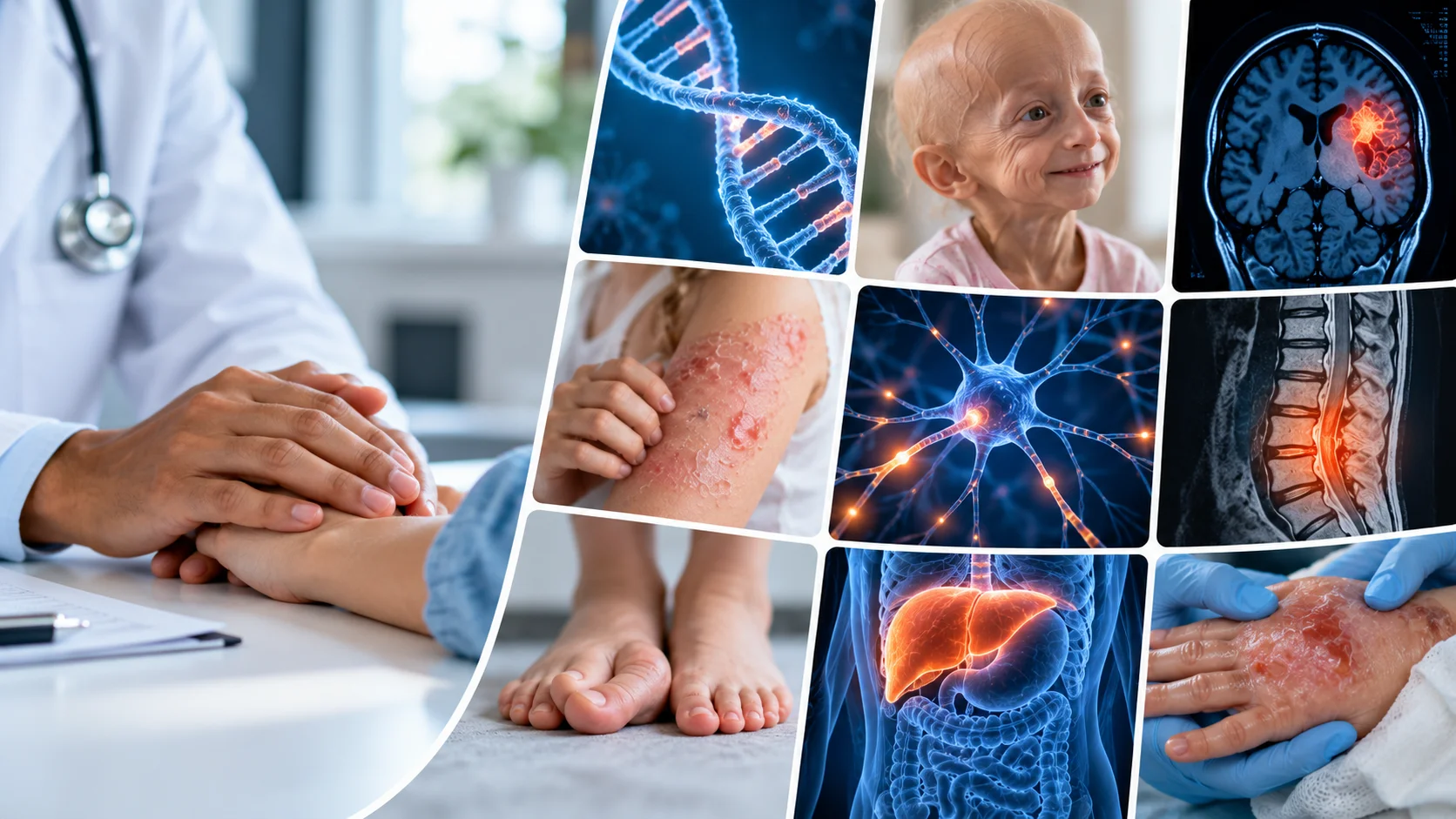
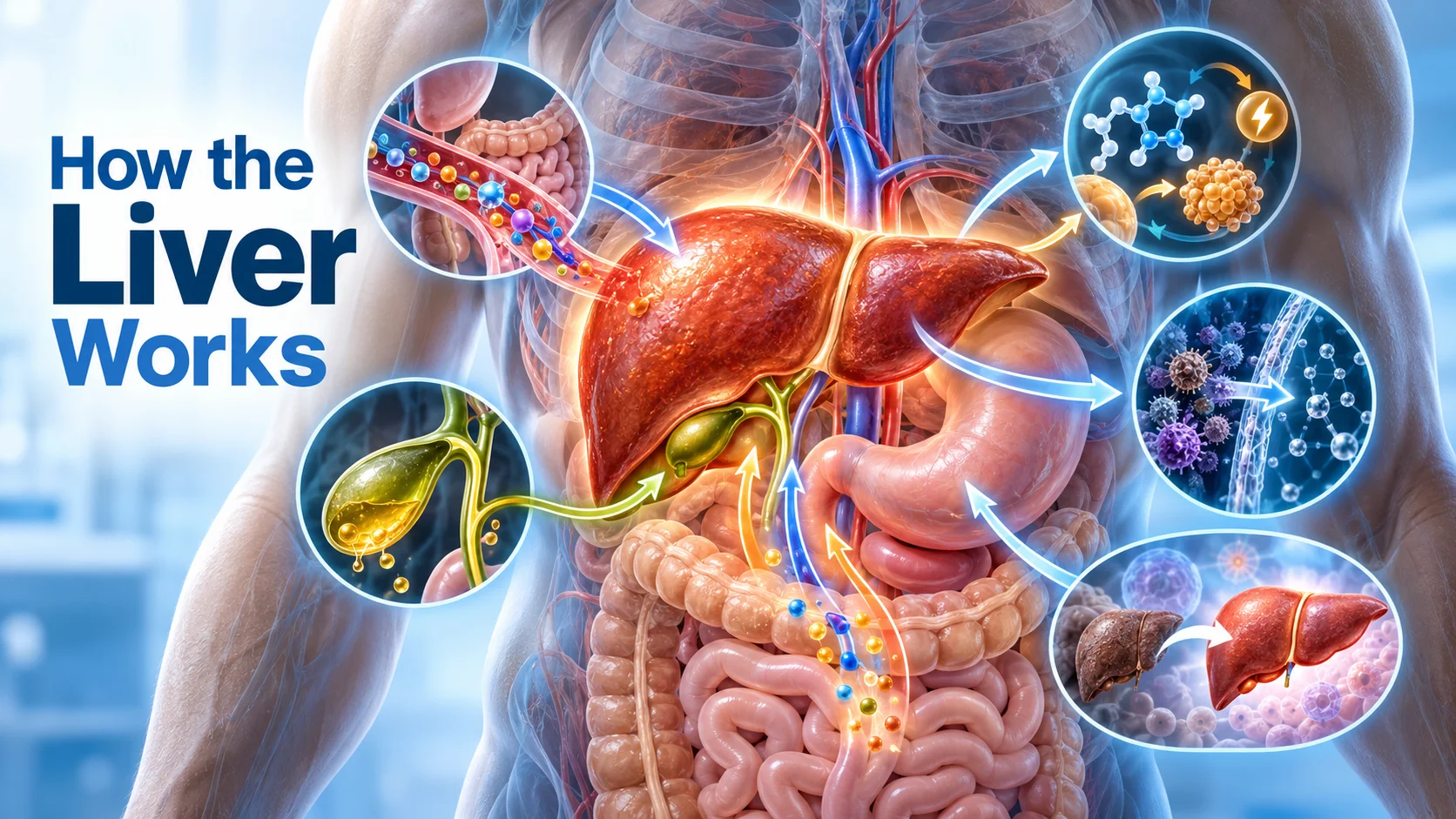
The liver is the body's largest internal organ, sitting on the right side of the abdomen just beneath the rib cage. It performs hundreds of distinct functions, which is why it's often described less as a single-purpose organ and more as the body's chemical processing plant.
Processing Everything That's Absorbed
Blood leaving the stomach and intestines, carrying newly absorbed nutrients, travels directly to the liver before reaching the rest of the body, via a dedicated route called the portal vein. This gives the liver first access to process nutrients, filter out substances the body doesn't need, and regulate what enters general circulation.
Metabolism Control Center
The liver manages the body's fuel supply. After a meal, it stores excess glucose as glycogen; between meals, it breaks glycogen back down into glucose to keep blood sugar stable. It also plays a central role in processing fats and producing many of the proteins found in blood plasma, including ones involved in clotting.
Filtering and Detoxifying
The liver breaks down and neutralizes a wide range of substances circulating in the blood, converting many of them into forms the kidneys can safely remove from the body through urine. It also breaks down old, worn-out red blood cells, recycling their components.
Producing Bile
The liver continuously produces bile, a yellow-green fluid stored in the gallbladder and released into the small intestine, where it helps break down fats so they can be absorbed. Bile pigments are also what give stool its characteristic color.
Remarkable Regenerative Ability
The liver has a unique capacity to regenerate. Even after losing a substantial portion of its tissue, through injury or surgery, it can regrow back to close to its original size and function over a period of weeks to months — a capability shared by few other organs in the human body.