The lymphatic system is a network of vessels, nodes, and organs that runs alongside the circulatory system, playing key roles in fluid balance and immune defense. Though less well known than the circulatory system, it performs work that the blood vessels alone can't handle.
Managing Fluid Balance
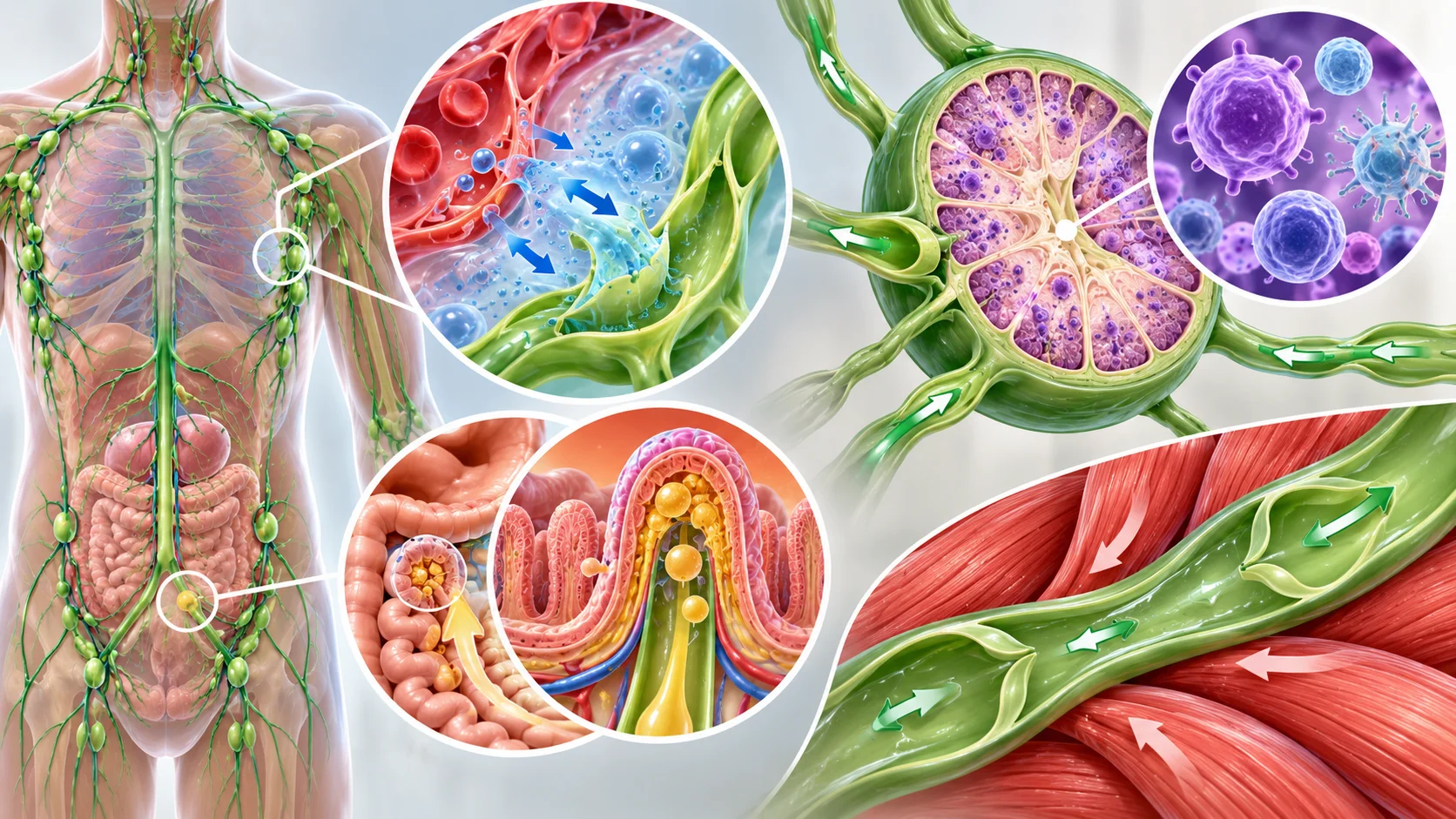
As blood circulates through capillaries, some fluid naturally leaks out into the surrounding tissue. Most of it is reabsorbed directly back into the bloodstream, but a portion remains in the tissue. The lymphatic system collects this excess fluid, now called lymph, through a network of small vessels, and eventually returns it to the bloodstream, preventing fluid from accumulating in tissues.
Filtering Through Lymph Nodes
As lymph travels through the lymphatic vessels, it passes through small, bean-shaped structures called lymph nodes, found throughout the body but concentrated in areas like the neck, armpits, and groin. Lymph nodes act as filtering stations, where immune cells inspect the fluid for bacteria, viruses, and other foreign material, and can mount an immune response if a threat is detected.
Supporting Immune Function
Lymph nodes and other lymphatic tissue serve as gathering points for white blood cells, particularly lymphocytes, a type of cell central to the immune system's ability to recognize and respond to specific pathogens. This is part of why lymph nodes can become temporarily enlarged during an infection, reflecting increased immune activity within them.
Absorbing Fats From Digestion
In the small intestine, a specialized part of the lymphatic system helps absorb fats and fat-soluble vitamins from digested food, transporting them through lymphatic vessels before they eventually join the bloodstream, a slightly different route than most other nutrients take.
A Vessel Network Without a Central Pump
Unlike the circulatory system, the lymphatic system has no central pump equivalent to the heart. Instead, lymph is moved along primarily through the natural squeezing action of surrounding muscles as the body moves, along with one-way valves within lymphatic vessels that keep the fluid flowing in a single direction.