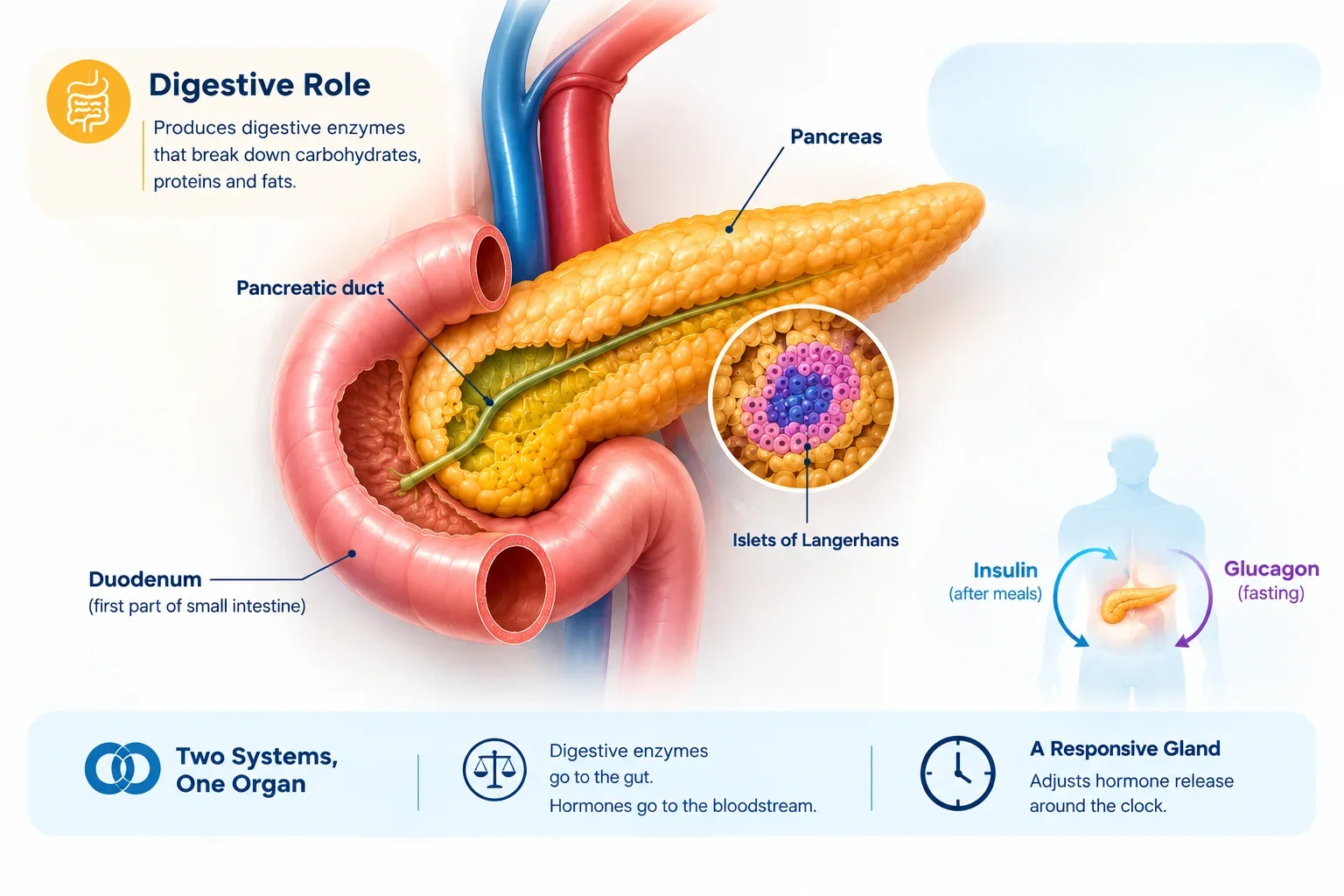
The pancreas is a long, flat gland tucked behind the stomach, in the upper abdomen. It performs two distinct jobs — one related to digestion, the other to regulating blood sugar — making it both a digestive organ and a hormone-producing gland.
The Digestive Role
The bulk of the pancreas is made up of tissue that produces digestive enzymes capable of breaking down carbohydrates, proteins, and fats. These enzymes are released into a network of small ducts that merge into the main pancreatic duct, which carries them into the duodenum, the first section of the small intestine, where they get to work on newly arrived food. The pancreas also releases a fluid rich in bicarbonate, which neutralizes the acidic chyme arriving from the stomach, protecting the intestinal lining.
The Hormonal Role
Scattered throughout the pancreas are small clusters of cells called the islets of Langerhans, which make up only a small fraction of the organ's total tissue but serve an outsized role. Certain cells within these islets produce insulin, a hormone that allows cells throughout the body to take up glucose from the bloodstream for energy. Other cells produce glucagon, which has the opposite effect, signaling the liver to release stored glucose when blood sugar runs low. Together, these two hormones keep blood sugar levels within a relatively narrow, stable range.
Two Systems, One Organ
These two functions operate largely independently. The enzyme-producing tissue releases its secretions into the digestive tract, while the hormone-producing islets release insulin and glucagon directly into the bloodstream, allowing the pancreas to influence digestion and blood sugar regulation at the same time through separate internal systems.
A Responsive Gland
The pancreas continuously adjusts its hormone output in response to blood sugar levels, releasing more insulin after a meal as glucose enters the bloodstream, and shifting toward glucagon release during periods without food, maintaining a steady balance around the clock.