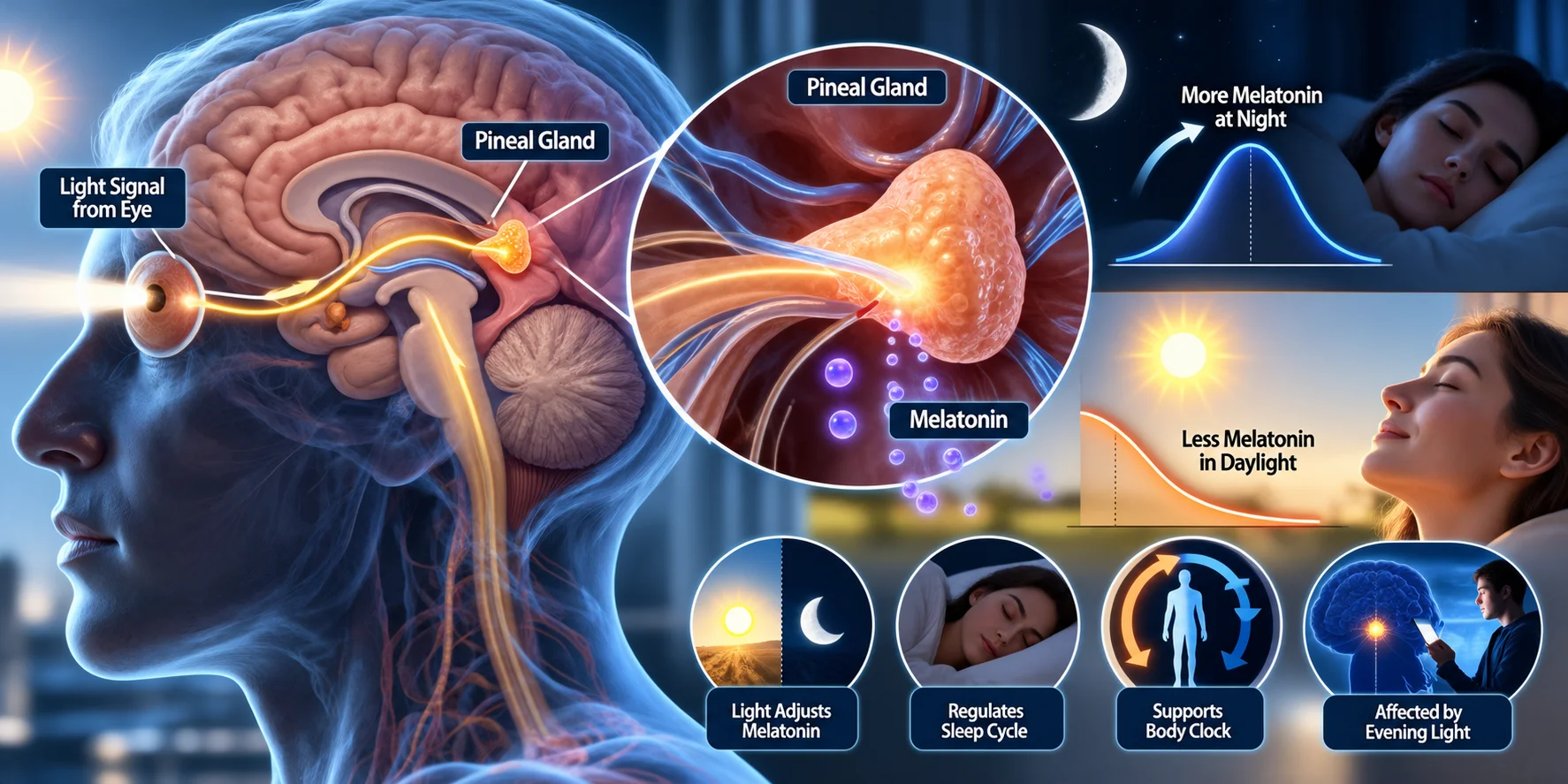
The pineal gland is a tiny, pea-sized structure located deep within the brain, near its center. Its main job is producing melatonin, a hormone closely tied to the body's internal sense of time.
Sensing Light and Dark
Although the pineal gland sits deep inside the brain, away from direct light, it receives information about light levels indirectly, through a pathway starting at the eyes. Specialized cells in the retina detect ambient light and send signals, via a series of connections, to the pineal gland, letting it know whether it's day or night.
Producing Melatonin
Based on this light information, the pineal gland adjusts its melatonin output. As darkness falls, melatonin production rises, signaling to the body that it's time to prepare for sleep. As light returns in the morning, melatonin production drops off. This rhythmic pattern helps regulate the body's sleep-wake cycle, often called the circadian rhythm.
Syncing the Body's Internal Clock
The circadian rhythm isn't generated by the pineal gland alone — a region of the hypothalamus acts as the body's primary internal clock — but the pineal gland's melatonin output serves as an important signal that helps synchronize this internal rhythm with the actual day-night cycle in the environment.
Influence Beyond Sleep
While melatonin's most recognized role relates to sleep timing, it has also been linked to seasonal biological rhythms in many animals, and research continues into its broader roles in the human body, including possible involvement in antioxidant processes.
A Gland Sensitive to Light Exposure
Because the pineal gland's activity depends so heavily on the pattern of light and dark a person experiences, exposure to artificial light in the evening can shift its melatonin output, which is part of why irregular light exposure can disrupt normal sleep timing.