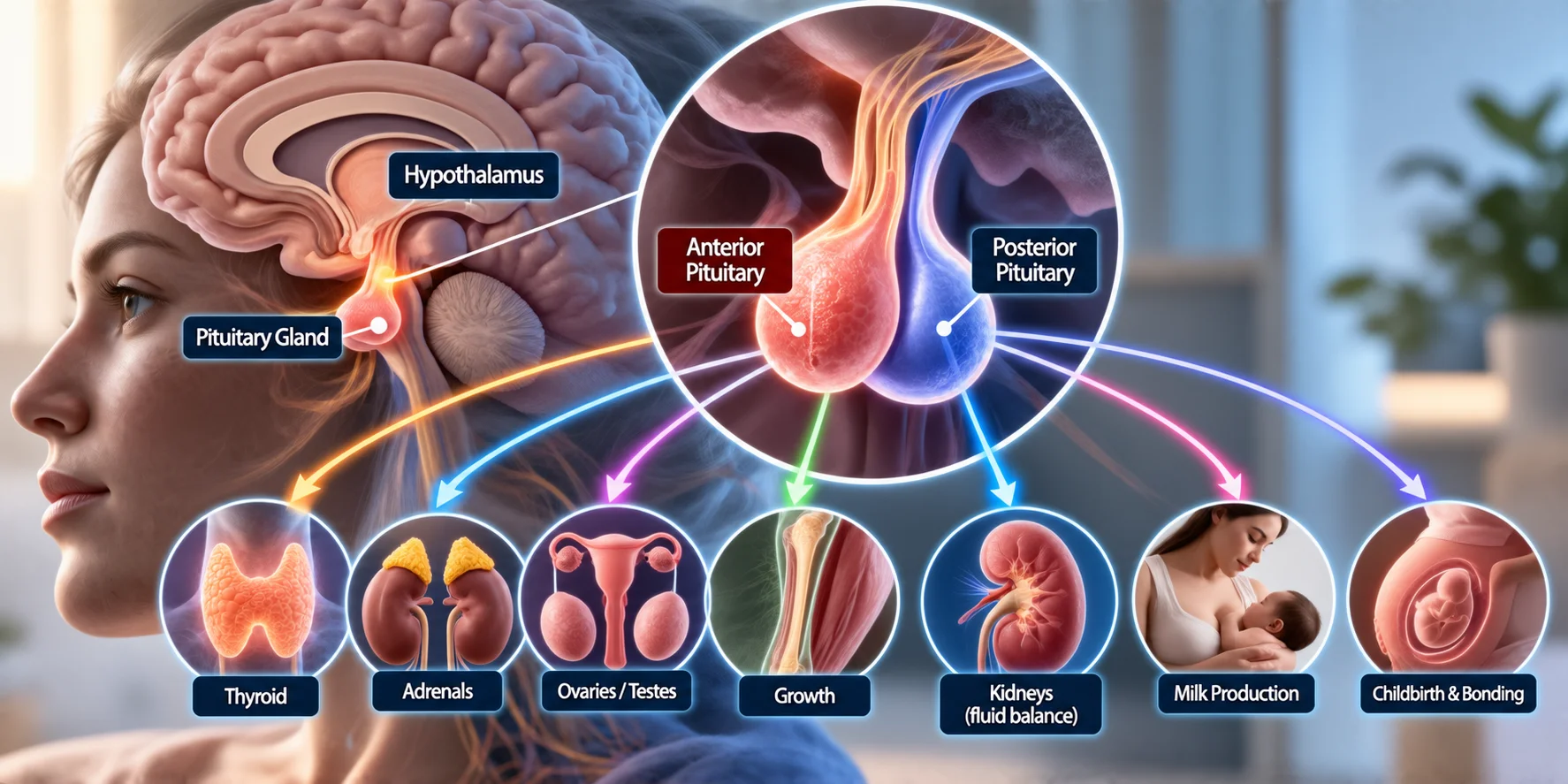
The pituitary gland is a pea-sized structure located at the base of the brain, connected to the hypothalamus just above it. Despite its small size, it's often called the body's "master gland" because the hormones it releases control the activity of several other glands throughout the body.
Two Connected Sections
The pituitary is made up of two distinct parts that function somewhat differently. The anterior pituitary produces and releases its own hormones in response to signals from the hypothalamus. The posterior pituitary, by contrast, doesn't produce hormones itself — it stores and releases hormones that are actually made in the hypothalamus and transported down a connecting stalk of tissue.
Directing Other Glands
Several hormones released by the anterior pituitary exist primarily to control other endocrine glands. Thyroid-stimulating hormone signals the thyroid gland to produce its hormones. Adrenocorticotropic hormone prompts the adrenal glands to release cortisol. Follicle-stimulating hormone and luteinizing hormone regulate the ovaries and testes. This layered structure — brain signals pituitary, pituitary signals other glands — allows the body to coordinate hormone production across multiple systems from a central point.
Growth and Direct Effects
The pituitary also produces hormones with more direct effects on the body. Growth hormone influences the growth of bones and tissues, particularly important during childhood and adolescence. Prolactin stimulates milk production after childbirth.
Stored Hormones
The posterior pituitary releases two hormones manufactured by the hypothalamus. Antidiuretic hormone, also called vasopressin, signals the kidneys to conserve water, helping regulate fluid balance. Oxytocin plays roles in childbirth and bonding-related processes.
A Feedback-Controlled System
Like much of the endocrine system, pituitary hormone release is governed by feedback loops. When hormone levels from a target gland, such as the thyroid, rise sufficiently, the pituitary reduces its stimulating signal, keeping the entire system in balance rather than producing hormones without limit.