The skin is the body's largest organ, covering an area of about two square meters in an average adult. Far from being a simple covering, it performs a range of active functions that make it essential to survival.
Three Layers
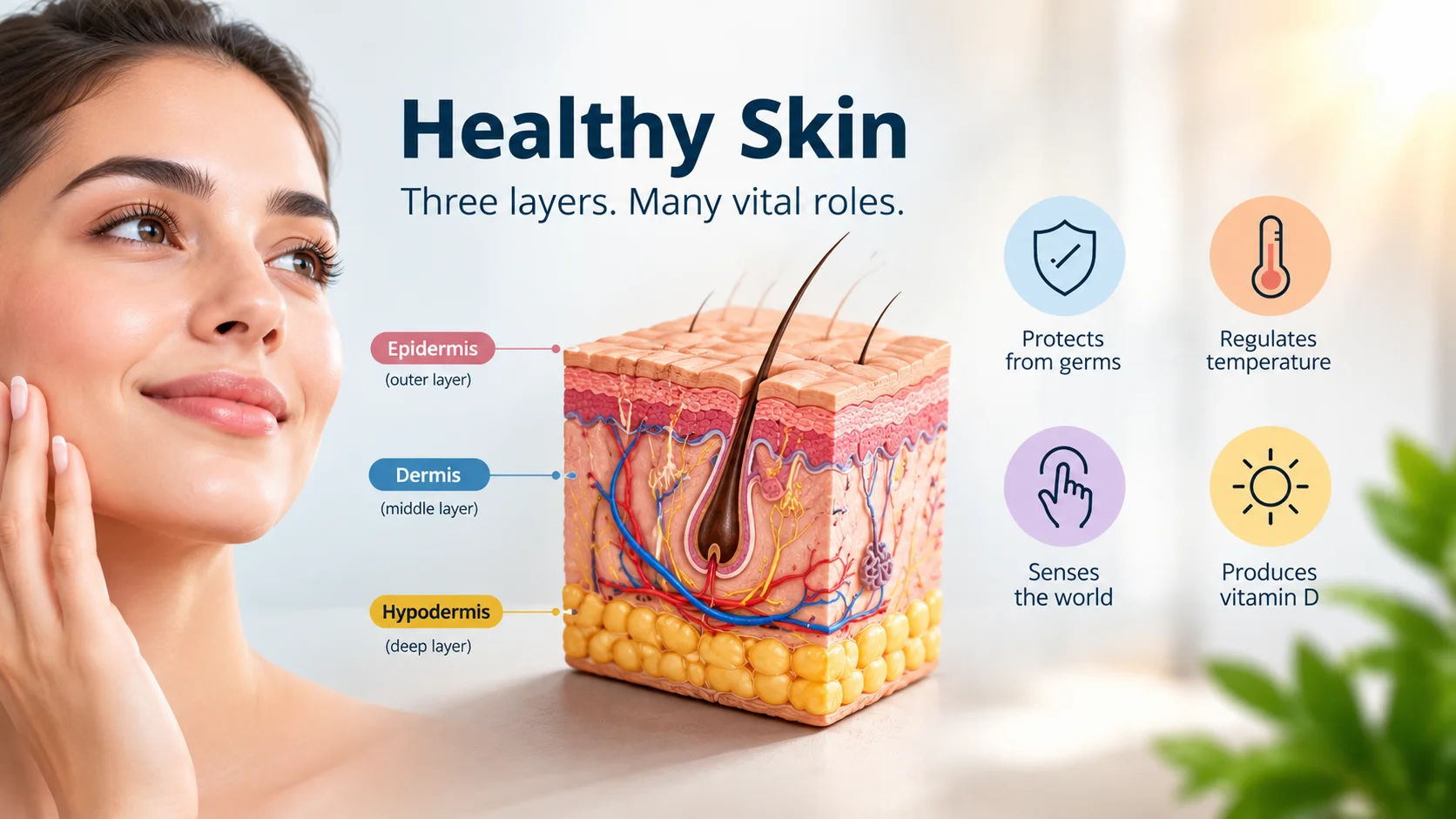
Skin is made up of three main layers. The epidermis, the outermost layer, is a tough, waterproof barrier made largely of dead, flattened cells that are continuously shed and replaced from below — the entire epidermis renews itself roughly every four weeks. Beneath it, the dermis contains blood vessels, nerve endings, hair follicles, and glands, and gives skin its strength and elasticity through a dense network of collagen fibers. The deepest layer, the hypodermis, is mostly fat tissue that cushions and insulates the body.
A Protective Barrier
The skin's most fundamental role is acting as a physical barrier, keeping out bacteria, viruses, and other potentially harmful substances, while also preventing the body from losing excessive amounts of water.
Regulating Temperature
Skin plays a central role in temperature control. Blood vessels near the surface can widen to release heat when the body is warm, or narrow to conserve it when the body is cold. Sweat glands release moisture onto the skin's surface, and its evaporation helps cool the body down.
Sensing the World
The dermis contains a dense network of nerve endings that detect touch, pressure, temperature, and pain, making skin the body's primary interface for sensing the physical environment.
Producing Vitamin D
When exposed to sunlight, cells in the skin trigger a chemical process that eventually produces vitamin D, a nutrient important for calcium absorption and bone health, making skin one of only a few organs that respond directly to sunlight to produce something the body needs.