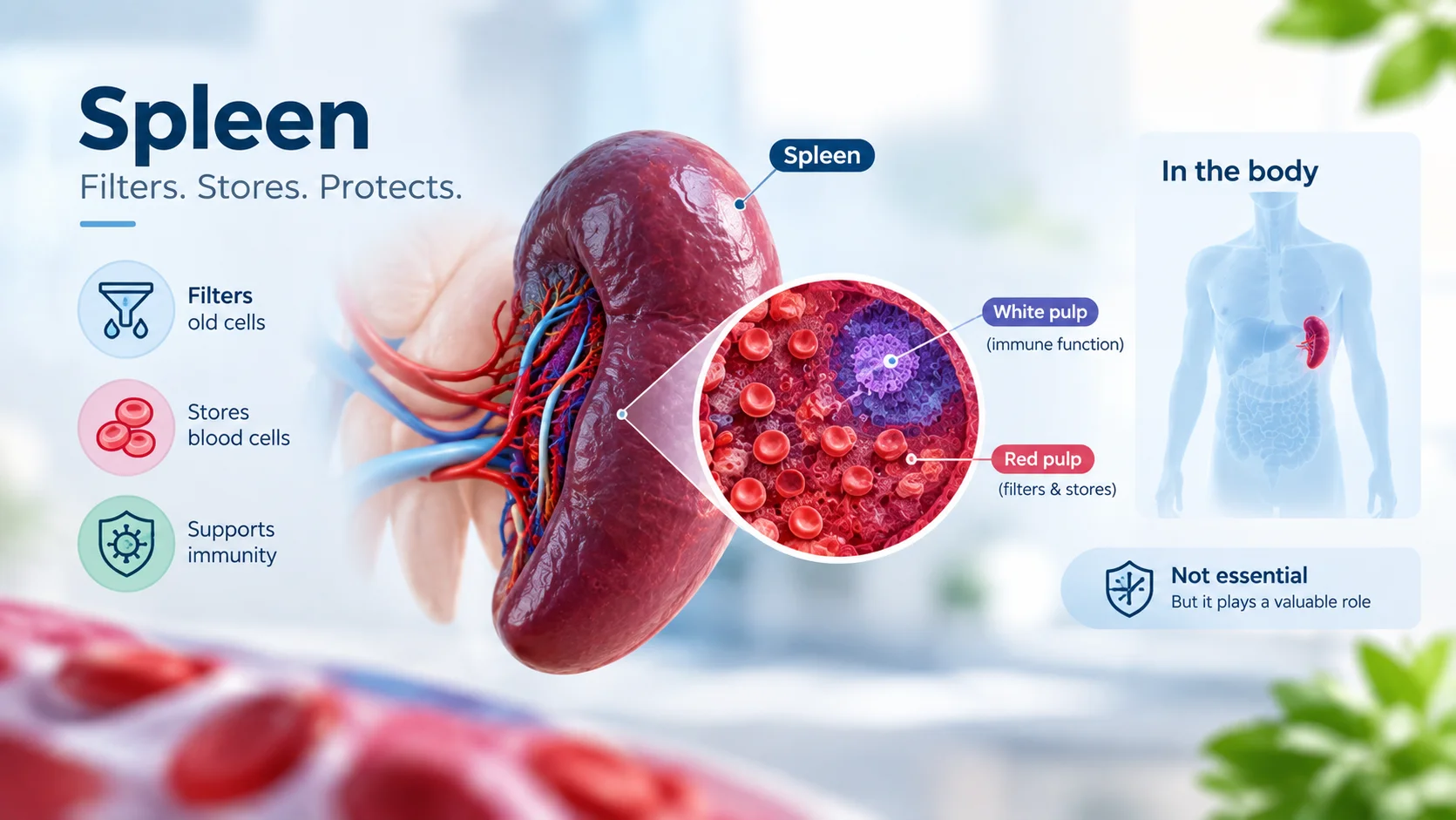
The spleen is a fist-sized organ tucked under the rib cage on the upper left side of the abdomen. Though less discussed than organs like the heart or lungs, it plays an important dual role in filtering blood and supporting the immune system.
Filtering the Blood
As blood passes through the spleen, it acts as a filter, identifying and removing old, damaged, or misshapen red blood cells from circulation. Red blood cells typically live for about 120 days, and it's largely the spleen's job to recognize when they've reached the end of their useful life and clear them out, recycling their components, including iron, for reuse elsewhere in the body.
A Reservoir for Blood Cells
The spleen also acts as a storage site, holding a reserve supply of red blood cells and platelets that can be released into circulation quickly if the body needs them, such as during blood loss.
Supporting Immune Defense
The spleen contains a significant amount of lymphatic tissue and serves as a meeting point for immune cells. As blood flows through, the spleen helps identify bacteria, viruses, and other pathogens circulating in the bloodstream, and supports the production of antibodies and immune cells that respond to them.
Two Distinct Zones
Internally, the spleen is organized into two types of tissue. The red pulp handles the filtering of red blood cells and blood storage, while the white pulp is more directly involved in immune functions, containing clusters of white blood cells that help detect and respond to threats in the blood.
Not Strictly Essential
Unlike many organs, a person can survive without a spleen, if it needs to be removed due to injury or other circumstances, because other organs, including the liver, can take over some of its filtering and immune-related functions. That said, the spleen normally plays a valuable, active role in a healthy body.