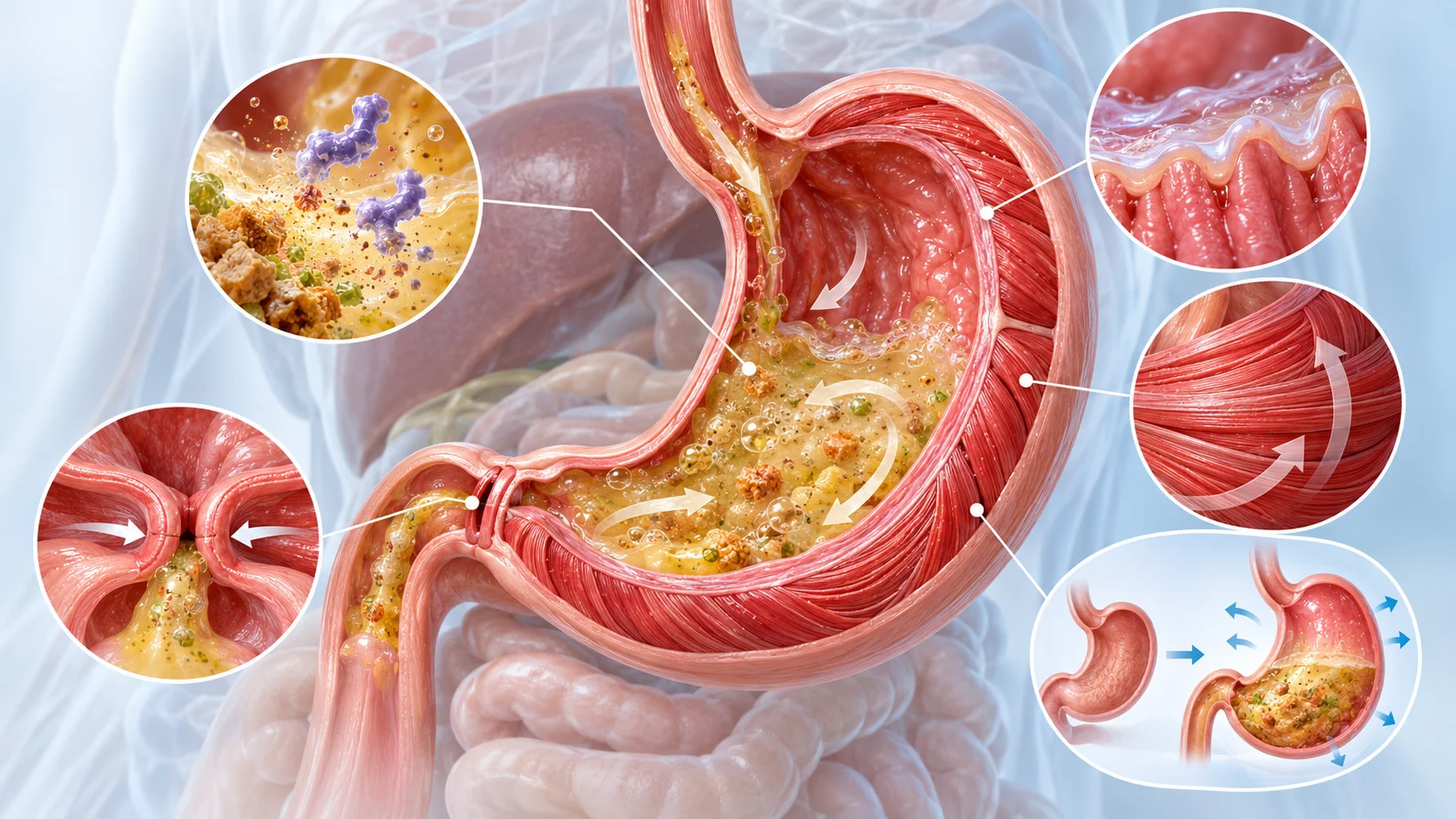
The stomach is a J-shaped, muscular sac located in the upper abdomen, positioned between the esophagus and the small intestine. It serves as both a temporary storage tank for food and the first major site of chemical digestion.
Mechanical Breakdown
When food arrives from the esophagus, the stomach's thick, layered muscular walls contract rhythmically, churning food and mixing it thoroughly with digestive juices. This muscular action breaks food down into a semi-liquid mixture called chyme.
Chemical Breakdown
Specialized cells lining the stomach wall release gastric juice, a mixture that includes hydrochloric acid and the enzyme pepsin. The acid creates a highly acidic environment that helps break down food and begins breaking proteins into smaller fragments, while also destroying many bacteria and other microorganisms that arrive with food.
Protecting Itself
Given how acidic the stomach's interior is, it needs a defense against digesting itself. A thick layer of mucus continuously coats the stomach lining, and the cells producing that lining are replaced roughly every few days, allowing the stomach to withstand an environment that would otherwise damage its own tissue.
Controlled Release
Food doesn't pass straight through the stomach into the intestine. A muscular valve called the pyloric sphincter, at the stomach's lower end, opens and closes to release chyme into the small intestine in small, controlled amounts, allowing the intestine time to process it properly rather than being overwhelmed all at once.
Storage and Signaling
The stomach can stretch considerably to accommodate a meal, and stretch receptors in its walls send signals to the brain that contribute to the sensation of fullness. On average, food stays in the stomach for two to four hours, depending on what was eaten, before moving on to the next stage of digestion.