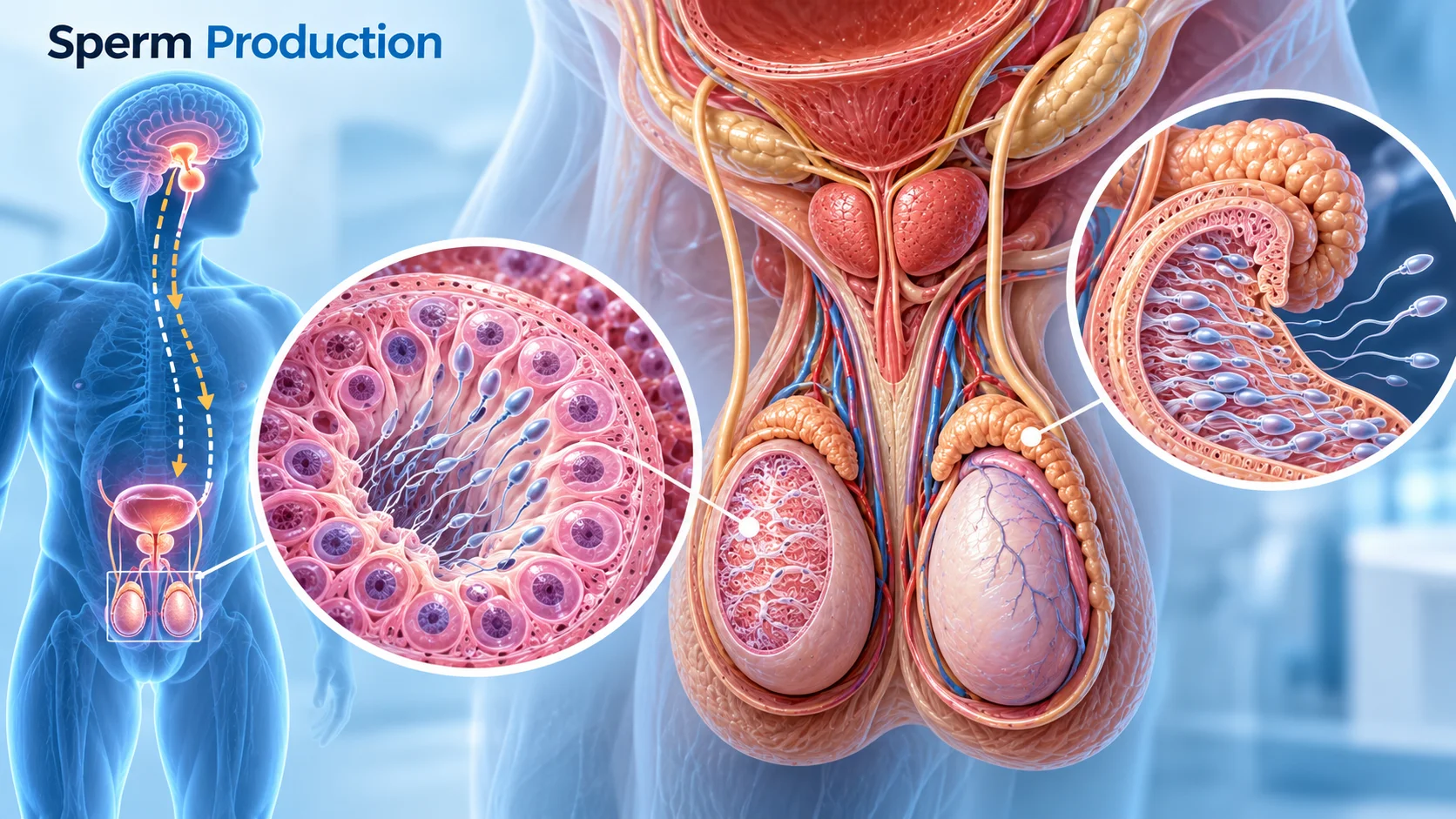
The testes are a pair of oval-shaped organs that form the core of the male reproductive system, responsible for producing sperm and the primary male reproductive hormone, testosterone.
Producing Sperm
Inside each testis is a dense network of tightly coiled tubes called seminiferous tubules, where sperm production takes place. This is a continuous process throughout adult life, with cells along the walls of these tubules progressively developing into mature sperm over a period of roughly two to three months.
A Temperature-Sensitive Process
Sperm production works best at a temperature slightly below normal body temperature, which is part of why the testes are located outside the main body cavity, within the scrotum. The scrotum can adjust its position, pulling closer to the body in cold conditions and hanging further away in warmer conditions, helping maintain a relatively stable, slightly cooler environment.
Producing Testosterone
Specialized cells located between the seminiferous tubules, called Leydig cells, produce testosterone. This hormone plays a central role during puberty, driving the development of male physical characteristics, and continues to support muscle mass, bone density, and sperm production throughout adulthood.
Directed by the Brain
Like the ovaries, testicular activity is regulated by hormonal signals from the pituitary gland. Luteinizing hormone stimulates testosterone production, while follicle-stimulating hormone supports the process of sperm development, keeping testicular function coordinated with the broader hormonal system.
From Production to Storage
Once sperm cells are produced within the testes, they move into a coiled structure called the epididymis, located along the back of each testis, where they mature further and are stored until they're needed, at which point they can be transported out of the body through a system of connecting ducts.