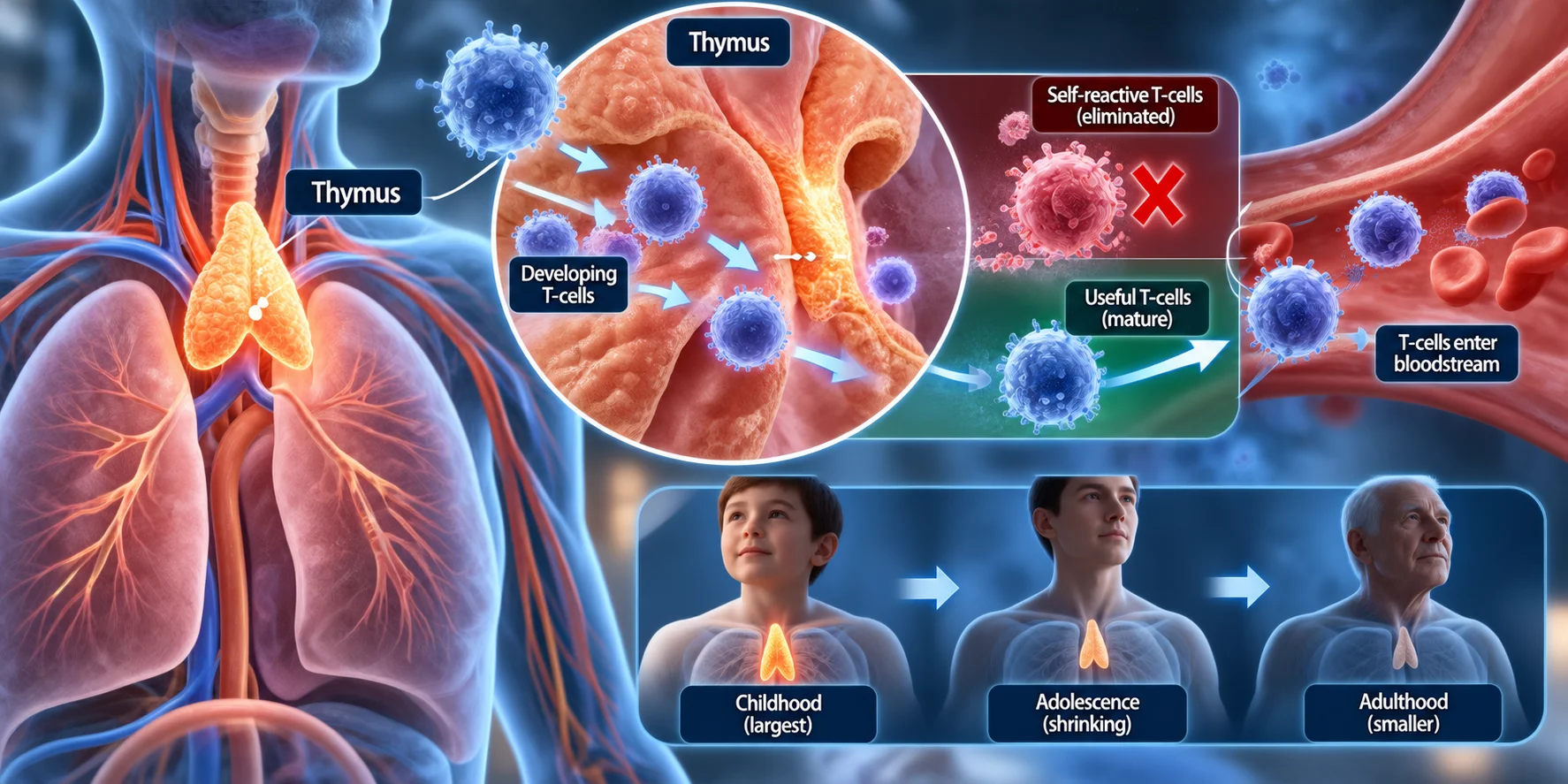
The thymus is a small gland located in the upper chest, just behind the breastbone. Unlike most organs, it's most active early in life and gradually shrinks with age, playing a critical but time-limited role in building the body's immune defenses.
Training Immune Cells
The thymus's primary role is to produce and mature a type of white blood cell called T-cells, a key part of the immune system. T-cells originate in bone marrow but travel to the thymus while still immature, where they undergo a process of development and, importantly, selection.
A Selective Process
Inside the thymus, developing T-cells are tested to see whether they can recognize the body's own tissues without mistakenly attacking them. Cells that would react against the body's own cells are eliminated, while cells that pass this screening and can properly recognize foreign invaders are allowed to mature and eventually released into the bloodstream. This selection process is central to preventing the immune system from attacking the body it's meant to protect.
Most Active Early in Life
The thymus is largest and most active during childhood, when the immune system is still being built and needs to generate a broad, diverse population of T-cells capable of recognizing a wide range of potential threats.
Gradual Shrinkage
After puberty, the thymus begins a slow process of shrinking, gradually being replaced by fatty tissue, a natural process called thymic involution. By later adulthood, the thymus is a fraction of the size it was in childhood, and T-cell production slows considerably, though the T-cells generated earlier in life continue circulating and functioning for years.
A Foundation, Not a Constant Presence
Because the thymus does most of its essential work early in life, establishing the body's core population of T-cells, its reduced activity in adulthood generally isn't a functional problem — the immune groundwork it laid down continues to serve the body long after the gland itself has become far less active.