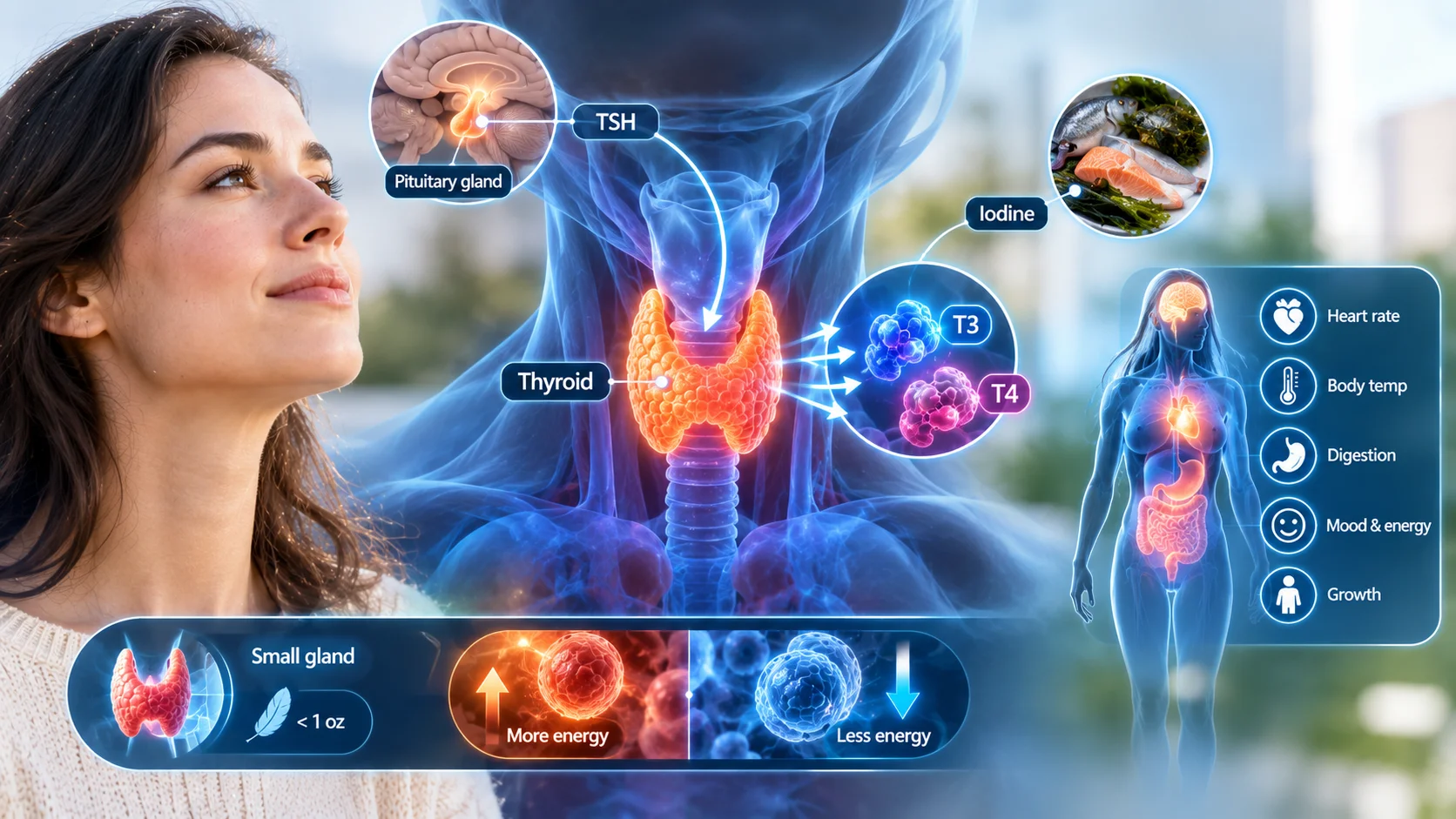
The thyroid is a small, butterfly-shaped gland located at the front of the neck, just below the voice box. Despite its modest size, it produces hormones that influence the pace at which nearly every cell in the body operates.
Producing Metabolic Hormones
The thyroid produces two main hormones, thyroxine and triiodothyronine, often referred to as T4 and T3. These hormones circulate throughout the body and influence how quickly cells convert nutrients into energy — essentially setting the body's metabolic rate. When thyroid hormone levels rise, cellular activity throughout the body speeds up; when levels drop, it slows down.
An Iodine-Dependent Process
Producing thyroid hormones requires iodine, a mineral obtained through diet. The thyroid actively absorbs iodine from the bloodstream and incorporates it into the hormone-building process, making it one of the few glands in the body with such a specific dependency on a single dietary mineral.
Controlled From Above
The thyroid doesn't operate independently. A small gland at the base of the brain called the pituitary gland monitors hormone levels in the blood and releases a signaling hormone called thyroid-stimulating hormone, or TSH, which tells the thyroid how much hormone to produce. This creates a feedback loop: when thyroid hormone levels are sufficient, TSH release decreases, and vice versa, keeping hormone levels within a stable range.
Influence Across the Body
Because nearly every cell has receptors for thyroid hormone, its effects reach far beyond metabolism alone, influencing heart rate, body temperature, digestion, and even mood and energy levels, and playing an important role in growth and development during childhood.
A Small Gland With Broad Reach
Weighing less than an ounce, the thyroid is one of the smallest endocrine glands, yet its hormones affect the functioning pace of virtually every organ system in the body simultaneously.