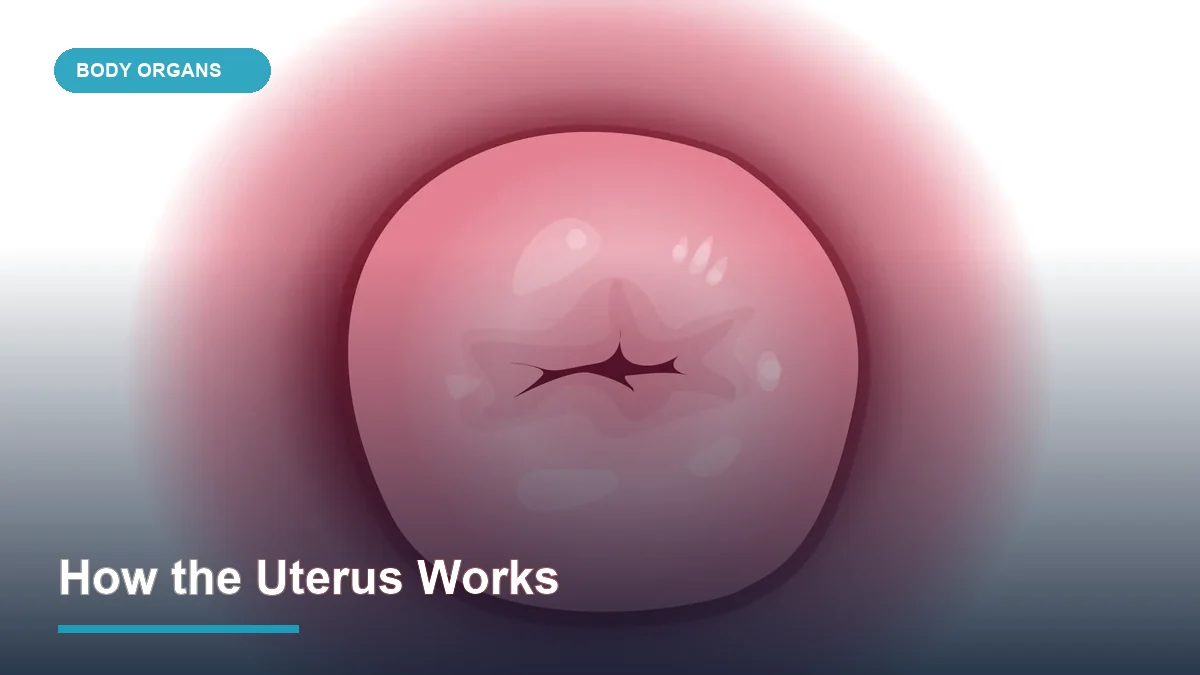
The uterus is a muscular, pear-shaped organ located in the pelvis, central to the female reproductive system. It's one of the few organs in the human body designed to change dramatically in size and structure over relatively short periods of time.
A Cyclical Lining
The inner lining of the uterus, called the endometrium, goes through a repeating cycle roughly once a month during the reproductive years. Under the influence of hormones from the ovaries, the lining thickens, building up tissue and blood vessels in preparation for a potential pregnancy. If a fertilized egg doesn't implant, this lining is shed, resulting in menstruation, after which the cycle begins again.
Supporting Early Pregnancy
If a fertilized egg does implant in the thickened uterine lining, the uterus begins supporting its development. The endometrium provides nourishment and a stable environment in the earliest stages, and the placenta, a specialized organ that develops during pregnancy, later takes over exchanging oxygen, nutrients, and waste between mother and developing fetus.
Remarkable Capacity for Growth
Over the course of a pregnancy, the uterus undergoes one of the most dramatic size changes of any organ in the human body, expanding many times its normal size to accommodate a growing fetus, largely through the growth and stretching of its thick muscular wall, called the myometrium.
A Powerful Muscular Wall
That same muscular wall, the myometrium, is responsible for the strong, coordinated contractions involved in childbirth, working to help move the fetus through the birth canal. Outside of pregnancy, milder contractions of this muscle also contribute to menstrual cramping.
Returning to Baseline
After childbirth, the uterus undergoes a process of gradually returning to close to its pre-pregnancy size over the following weeks, a testament to how adaptable and resilient this particular muscular organ is across dramatically different states.