What It Is
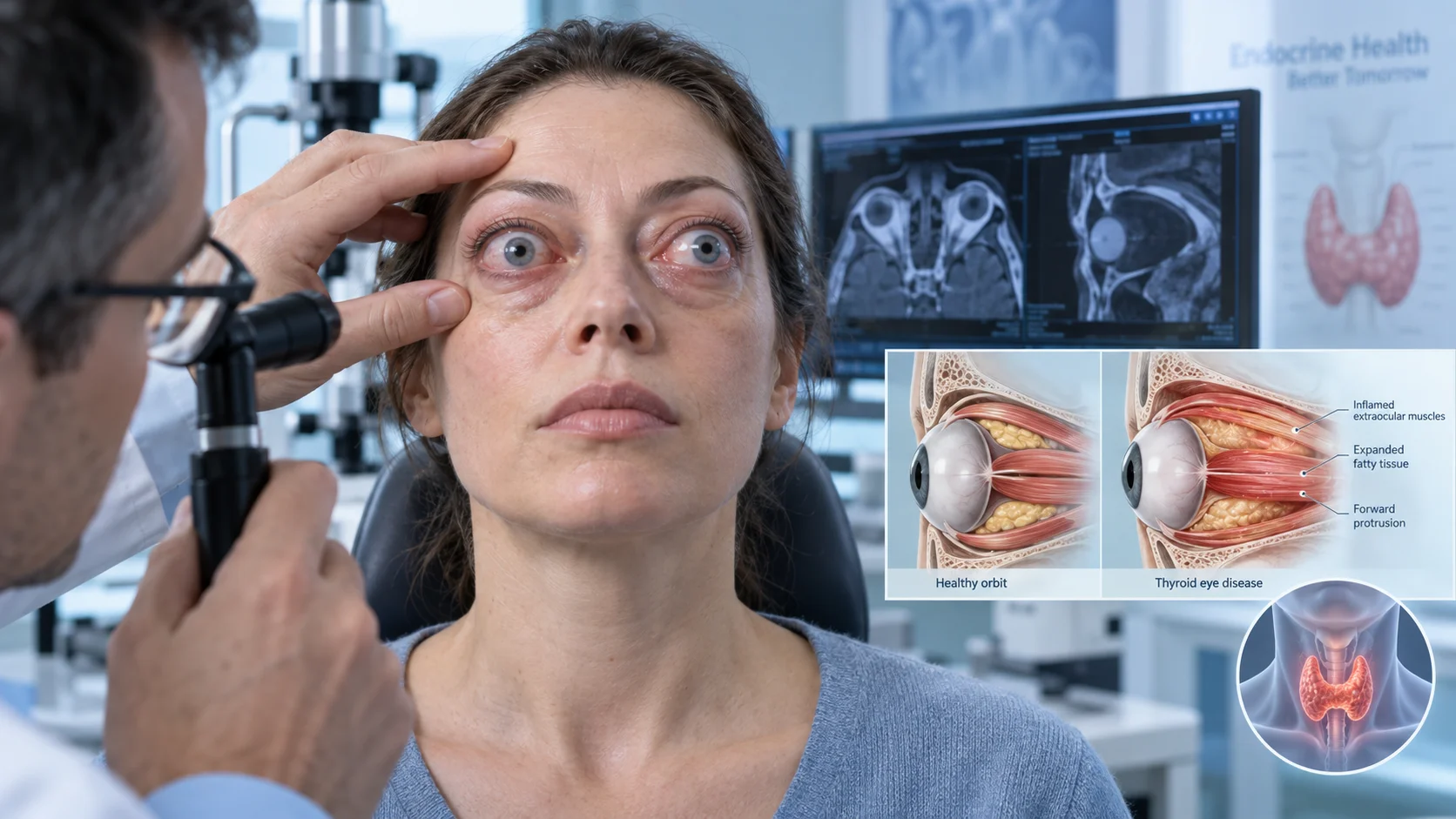
Thyroid eye disease is a condition in which the tissues surrounding the eyes, including the muscles that control eye movement and the fatty tissue within the eye socket, become inflamed and swollen, most commonly occurring in association with an overactive thyroid gland.
How It Develops
Thyroid eye disease is generally considered an autoimmune condition, in which the immune system mistakenly targets tissue around the eyes, causing inflammation and, over time, swelling of the muscles and fatty tissue within the eye socket. It's most strongly associated with Graves' disease, a specific autoimmune condition affecting the thyroid gland, and the eye-related inflammation appears to result from a related but somewhat separate immune process occurring around the same time.
General Symptoms
Common symptoms of thyroid eye disease include bulging of the eyes, eyelid swelling or retraction, redness, and a gritty or dry sensation. In more significant cases, restricted eye movement and double vision can develop, and, in the most severe cases, swelling within the eye socket can put pressure on the optic nerve and threaten vision.
General Treatment Approaches
Milder cases of thyroid eye disease are often managed with lubricating eye drops and measures to protect the eye's surface, alongside managing the underlying thyroid condition. For more significant inflammation, treatments aimed at calming the immune system's activity may be used. In cases involving pressure on the optic nerve or significant cosmetic or functional concerns after the active inflammatory phase has settled, surgery may be considered.
Background
The connection between eye changes and thyroid disease was recognized as early as the 19th century, around the same period that Graves' disease itself was being characterized as a distinct condition. A more detailed understanding of thyroid eye disease as its own related but distinct autoimmune process developed considerably over the 20th century, and in recent years, newer targeted treatments aimed more specifically at the immune pathways involved have expanded the options available for managing more significant cases.