What It Is
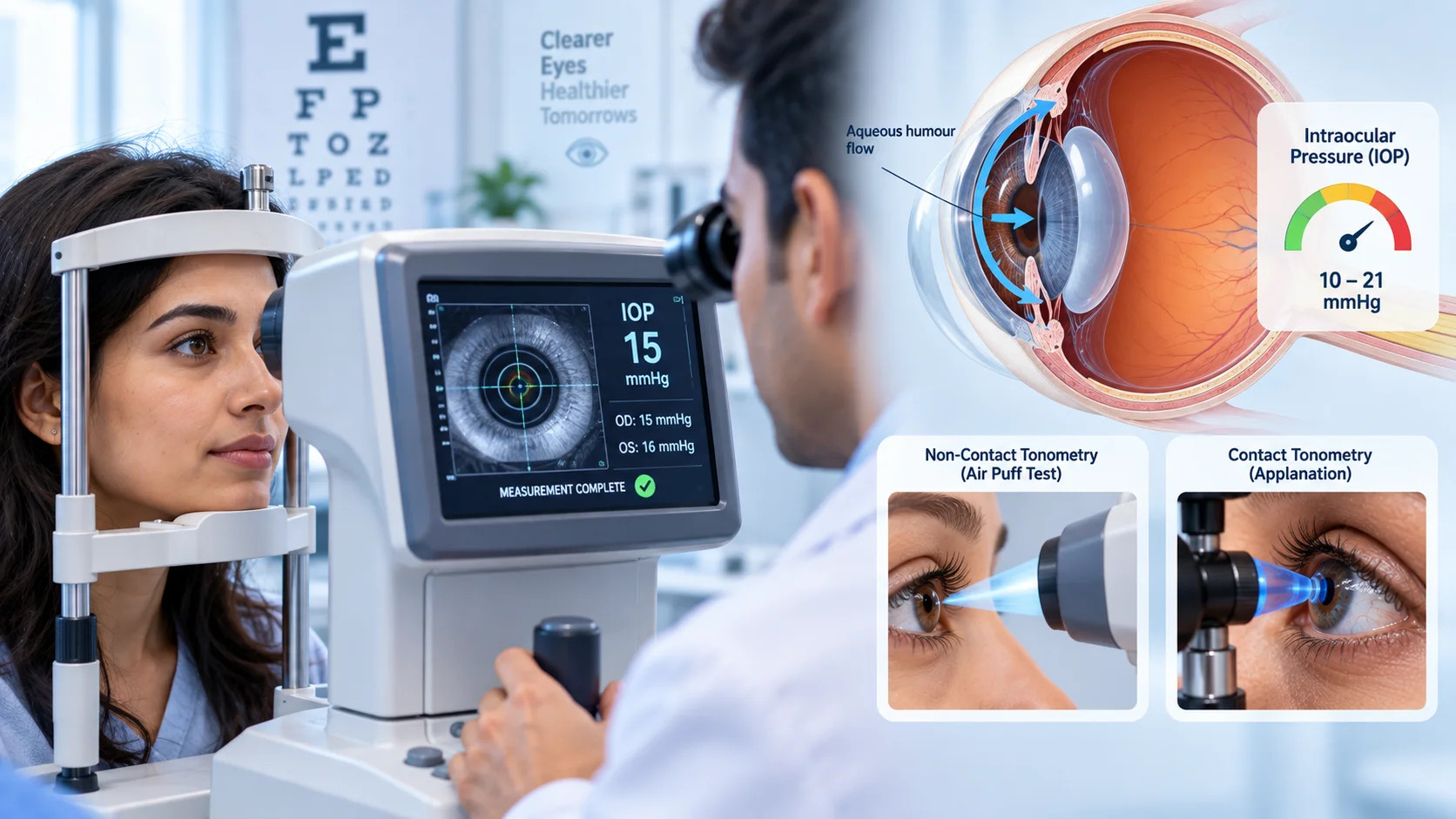
Tonometry is a test that measures the pressure inside the eye, known as intraocular pressure, an important measurement in assessing eye health.
What It Checks
Tonometry measures the fluid pressure within the eye. The eye continuously produces and drains a small amount of fluid to maintain its shape and internal environment, and tonometry checks whether this pressure falls within a typical range.
Why It's Used
Tonometry is commonly used as part of routine eye examinations, particularly given how relevant eye pressure is to certain eye conditions, and is used to monitor eye pressure over time in people being followed for such conditions.
How It's Done
Several different tonometry techniques exist. Some involve gently touching the surface of the eye with a specialized instrument after applying numbing eye drops, while others use a brief, painless puff of air directed at the eye to measure how the eye's surface responds, without any direct contact.
Background
Early methods for estimating eye pressure were developed in the 19th century, but more precise, standardized tonometry techniques were developed over the 20th century as understanding grew of how eye pressure relates to certain eye conditions. Various tonometry techniques, including both contact-based and non-contact methods, have been refined since then, and the test remains a standard, quick part of comprehensive eye examinations today.