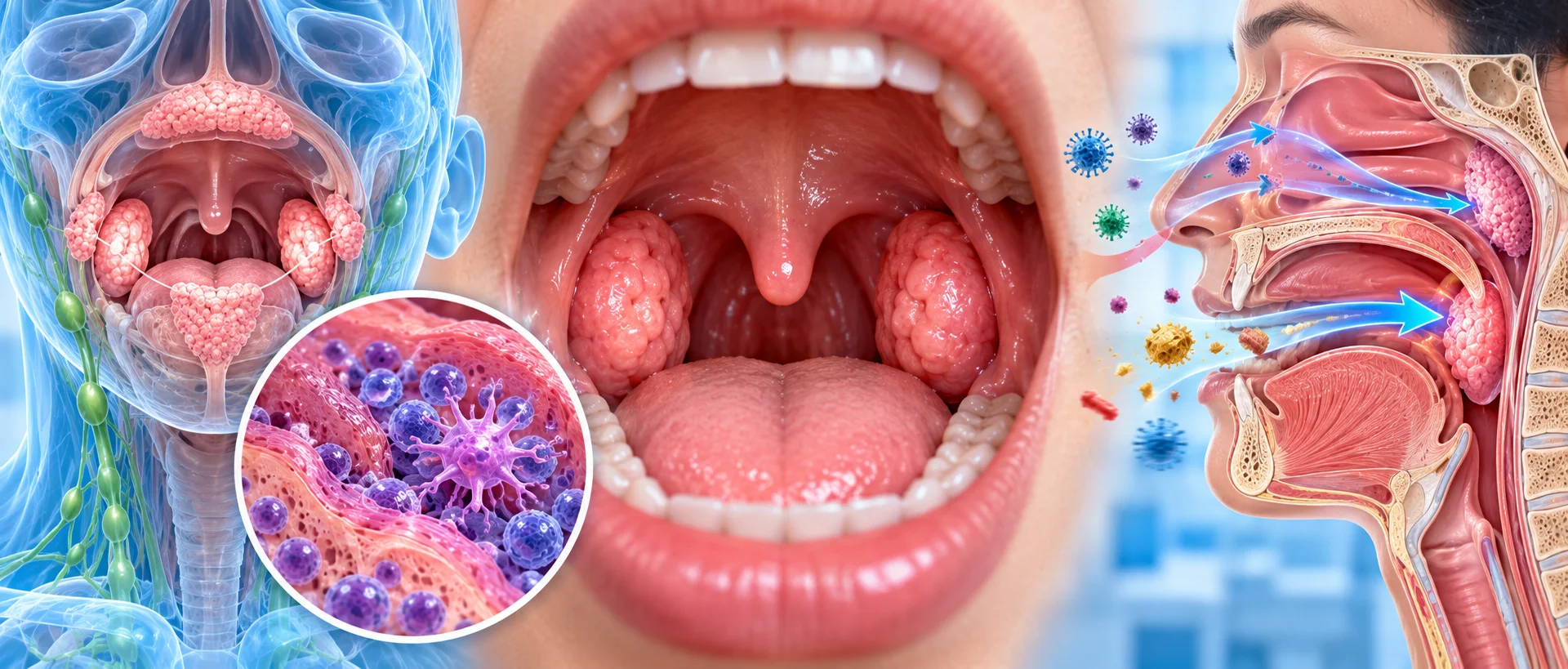
The tonsils are small clusters of lymphatic tissue located at the back of the throat, forming part of the body's immune system. Most people are referring to the palatine tonsils, the pair visible on either side of the throat, though there are other, less visible tonsils nearby as well.
Positioned as an Early Checkpoint
The tonsils are strategically positioned at the entrance to both the digestive and respiratory tracts, meaning they're among the first tissues to encounter bacteria, viruses, and other particles entering the body through the nose and mouth.
An Immune Surveillance Role
Tonsil tissue contains a concentration of immune cells, including lymphocytes, that help detect and respond to potentially harmful microorganisms. When the tonsils encounter bacteria or viruses, they can help trigger an immune response, including the production of antibodies aimed at that specific threat, contributing to the body's broader defense system.
Part of a Larger Ring of Tissue
The palatine tonsils are part of a broader ring of lymphatic tissue surrounding the back of the throat and nasal cavity, which also includes the adenoids, located higher up behind the nose, and smaller tonsil tissue at the base of the tongue. Together, this ring of tissue is positioned to monitor air and food passing through this shared region.
Changing Prominence Over Time
Tonsil tissue tends to be more active and relatively larger during childhood, a period when the immune system is still developing broad exposure to different pathogens. As with the thymus, tonsil tissue often becomes relatively smaller with age, reflecting a general pattern seen in several parts of the body's early immune development system.
Background
The tonsils have been recognized as anatomical structures since ancient medical observation, though their specific role within the immune system wasn't clearly understood until the development of immunology as a distinct field in the 19th and 20th centuries. This later research clarified the tonsils' function as an early checkpoint for immune surveillance, adding meaningful context to structures that had been observed anatomically for a very long time.