What It Is
Trachoma is a chronic eye infection caused by a specific type of bacteria, and is one of the leading infectious causes of preventable blindness worldwide, particularly in areas with limited access to clean water and sanitation.
How It Develops
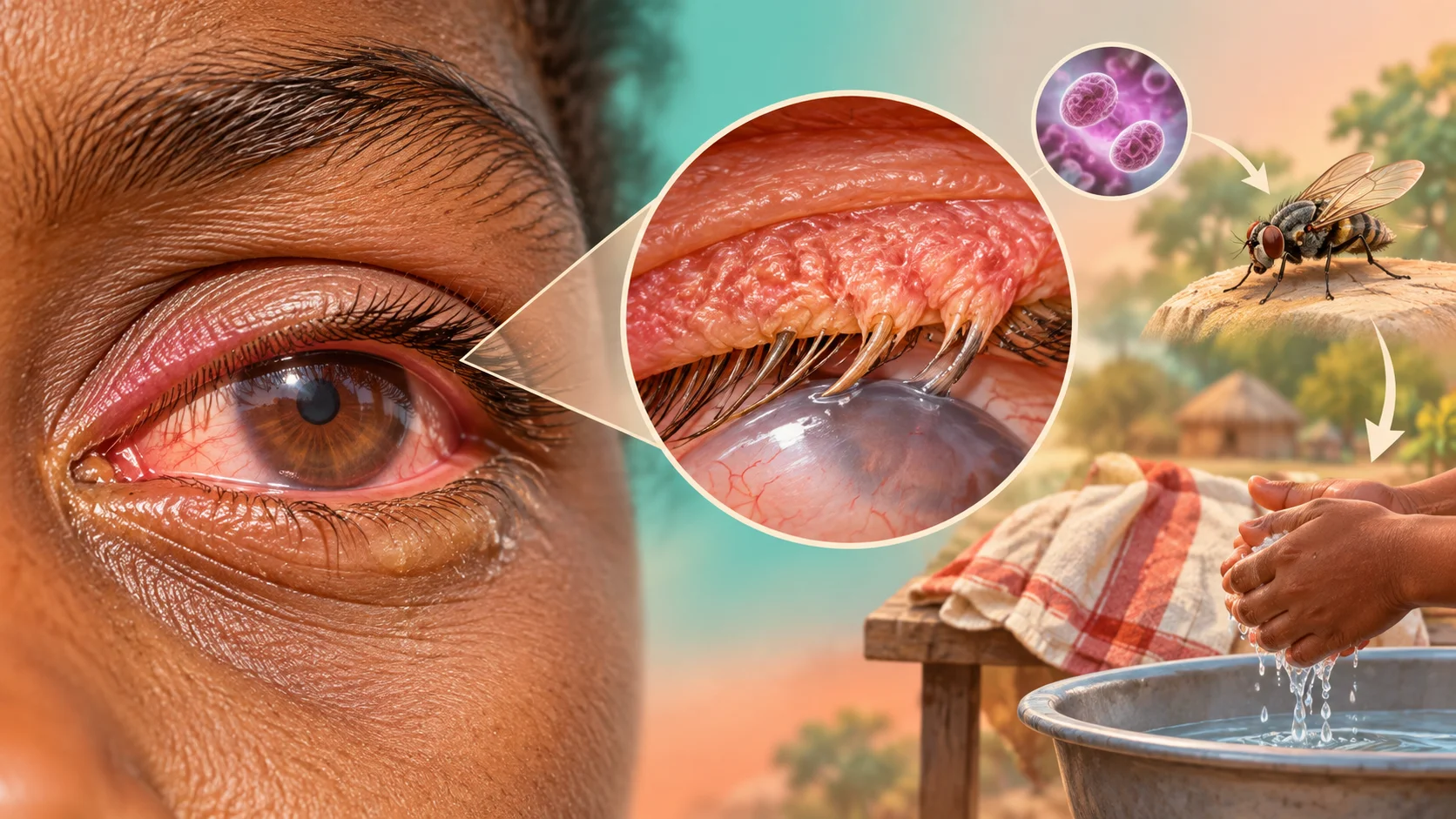
Trachoma is caused by a bacteria that spreads through direct contact with eye or nose discharge from an infected person, often via hands, shared cloths, or flies that have had contact with an infected person. Repeated infections over time can cause the inner surface of the eyelid to become scarred. This scarring can eventually cause the eyelid and eyelashes to turn inward, allowing the eyelashes to rub against and damage the cornea with each blink.
General Symptoms
Early trachoma infection often causes mild symptoms similar to general conjunctivitis, including redness, irritation, and discharge. With repeated infections over years, particularly common in childhood in affected regions, the more serious symptoms related to eyelid scarring and inward-turning eyelashes can develop, ultimately threatening vision if untreated.
General Treatment Approaches
Early trachoma infection is commonly treated with antibiotics. For more advanced cases where scarring has caused the eyelid and eyelashes to turn inward, surgery to correct the eyelid position is often needed to prevent the eyelashes from continuing to damage the cornea. Broader public health measures, including improved access to clean water and facial hygiene, along with reducing fly populations in affected communities, play an important role in prevention.
Background
Trachoma has been recognized as a cause of vision loss since ancient times, with descriptions found in some of the oldest surviving medical texts from Egypt and elsewhere. Coordinated global public health efforts over recent decades, combining antibiotic treatment, surgery for advanced cases, and hygiene and sanitation improvements, have led to significant declines in trachoma-related blindness in many regions, though it remains a public health concern in certain parts of the world today.