What It Is
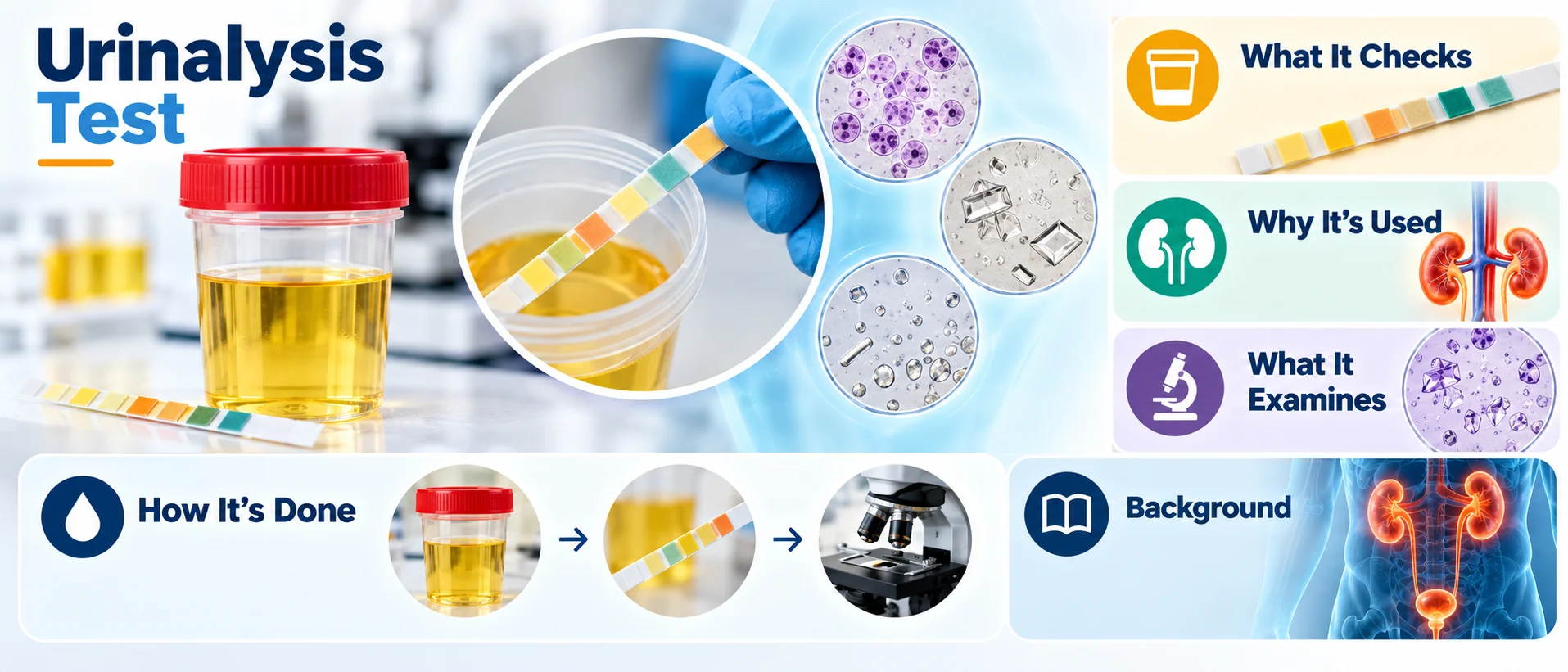
A urinalysis is a test that examines a urine sample, looking at its physical, chemical, and microscopic properties to gather information about overall health, particularly related to the kidneys and urinary tract.
What It Checks
A urinalysis typically looks at several aspects of urine at once. This includes physical characteristics like color and clarity, chemical properties such as the presence of protein, glucose, or other substances not normally found in urine in significant amounts, and a microscopic examination that can detect cells, crystals, or other particles present in the sample.
Why It's Used
Because urine composition reflects how the kidneys are filtering blood, a urinalysis is commonly used as part of routine health checkups, to investigate symptoms related to the urinary tract, and to help evaluate general kidney and metabolic health.
How It's Done
A urinalysis requires a urine sample, usually collected by the person themselves into a clean container, often following specific instructions to reduce the chance of contamination. The sample is then sent to a laboratory, where it's evaluated using a combination of visual inspection, chemical test strips, and microscopic examination.
Background
Examining urine as an indicator of health has a very long history, with descriptions dating back to ancient medical traditions, long before the chemical basis of many of its components was understood. Urinalysis became far more precise and standardized in the 19th and 20th centuries, as chemical test strips and microscopy techniques were developed and refined, transforming it from a largely observational practice into the detailed, standardized laboratory test used routinely in healthcare today.