What It Is
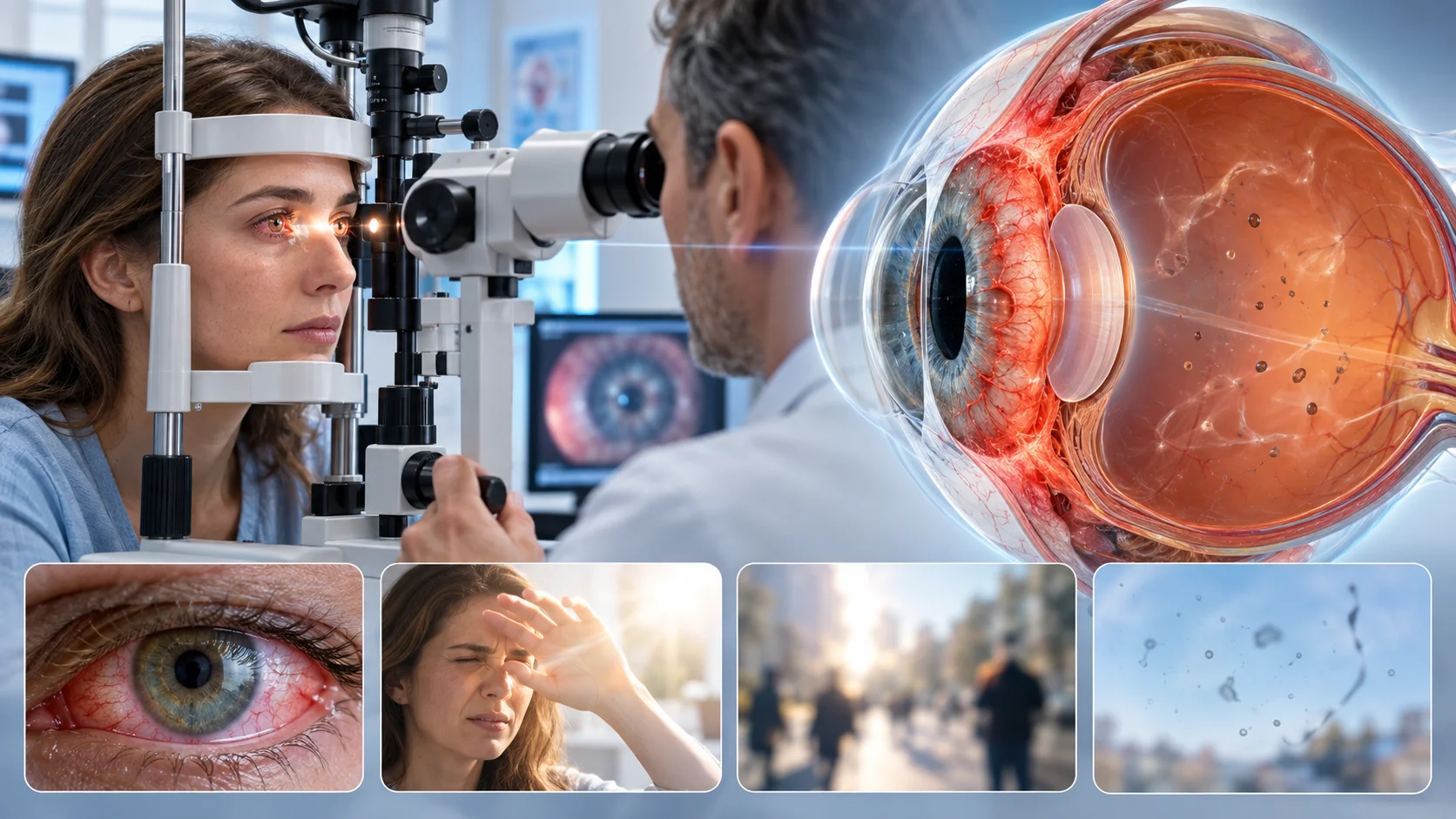
Uveitis is inflammation of the uvea, the middle layer of the eye, which includes the iris and other closely connected structures involved in supplying blood to the eye.
How It Develops
Uveitis can develop for a variety of reasons, including certain infections, autoimmune conditions in which the immune system mistakenly targets tissue within the eye, or, in some cases, without any clearly identified underlying cause. Because the uvea is closely connected to several other important eye structures, inflammation in this area can sometimes affect nearby structures as well, depending on which specific part of the uvea is involved.
General Symptoms
Common symptoms of uveitis include eye pain, redness, sensitivity to light, blurred vision, and floaters. Symptoms can develop suddenly or more gradually depending on the specific type and underlying cause, and uveitis can affect one or both eyes.
General Treatment Approaches
Treatment for uveitis generally aims to reduce inflammation and address any underlying cause that's been identified. Corticosteroid eye drops or other anti-inflammatory treatments are commonly used to calm the inflammation directly, and in cases related to an underlying autoimmune condition, broader immune-modulating treatment may also be part of management. Prompt treatment is generally emphasized, given the potential for uveitis to affect vision if it isn't adequately controlled.
Background
Uveitis has been recognized as a distinct pattern of eye inflammation since early ophthalmology developed as a specialty, though a more detailed understanding of its many different possible underlying causes, spanning infectious and autoimmune categories, developed considerably over the 20th century. This growing understanding has supported an increasingly tailored approach to treatment, based on identifying the specific underlying cause whenever possible.