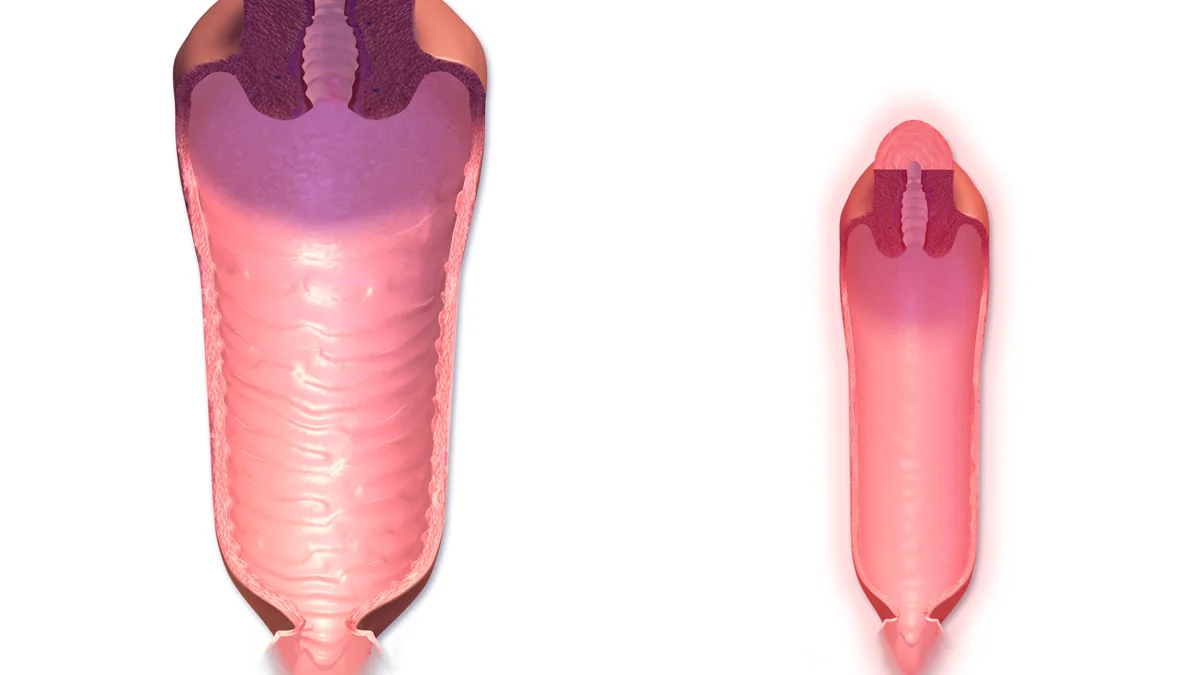
The vagina is a muscular, elastic canal that forms part of the female reproductive system, connecting the external genital area to the cervix and uterus above it.
A Flexible, Muscular Structure
The walls of the vagina are made of elastic muscular tissue capable of considerable expansion and contraction, allowing it to accommodate a range of different functions throughout life. This elasticity is supported by folds in the vaginal lining, which allow it to stretch as needed.
Its Role in the Reproductive Cycle
The vagina serves as the pathway through which menstrual blood leaves the body during menstruation, and it's also the passageway through which sperm travel toward the cervix and uterus following intercourse. Its muscular walls and natural elasticity support these functions across a wide range of physical demands.
Its Role During Childbirth
During childbirth, the vagina forms part of the birth canal, expanding considerably to allow a baby to pass through during delivery. Its elastic muscular structure is well suited to this significant, though temporary, degree of expansion.
A Self-Regulating Environment
The vagina maintains its own internal environment, supported by a naturally occurring community of bacteria, predominantly a type called lactobacilli. These bacteria help maintain an acidic environment within the vagina, which plays a role in limiting the growth of other, potentially harmful microorganisms. The vaginal walls also produce natural secretions that help keep the tissue moist and support this self-regulating environment.
Background
Anatomical understanding of the vagina has developed over centuries of medical study, though understanding of its natural bacterial environment and self-regulating properties advanced considerably more recently, particularly as microbiology developed as a field in the 19th and 20th centuries. This later research clarified the protective role that naturally occurring vaginal bacteria play in maintaining a healthy internal environment, adding an important layer to the broader anatomical understanding of the structure.