What It Is
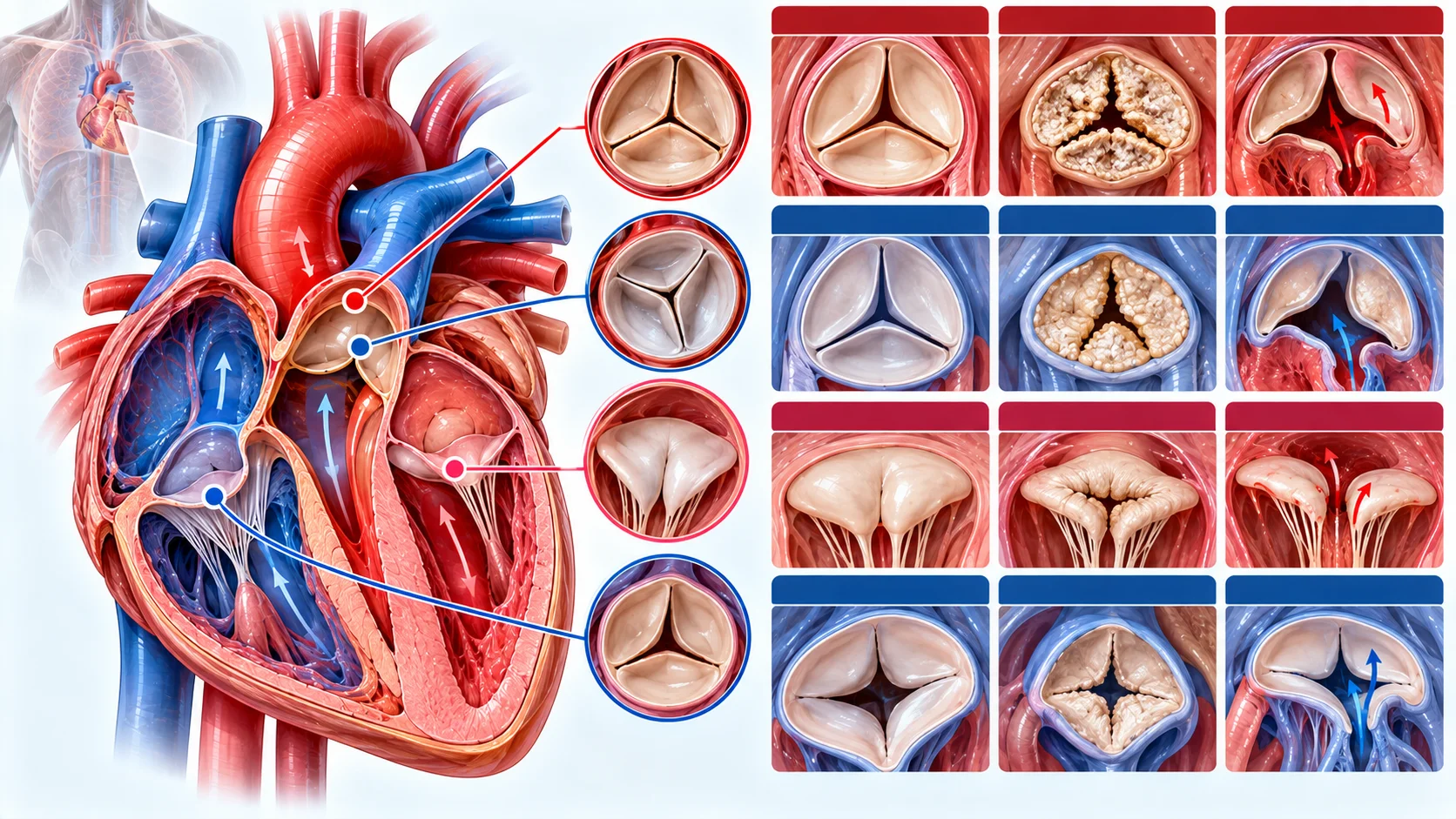
Valvular heart disease refers to conditions affecting one or more of the heart's four valves, which normally open and close in a coordinated way to keep blood flowing in one direction through the heart.
How It Develops
Heart valves can be affected in two broad ways. In some cases, a valve doesn't open fully, called stenosis, which restricts blood flow through it. In other cases, a valve doesn't close completely, called regurgitation, allowing blood to leak backward. These changes can develop due to age-related wear over time, prior infections affecting the valve, congenital differences present from birth, or damage related to other underlying heart conditions.
General Symptoms
Symptoms of valvular heart disease depend on which valve is affected and how significantly its function is altered, but often include shortness of breath, fatigue, and a sensation of an irregular or noticeable heartbeat. In some cases, a distinctive sound, called a heart murmur, can be detected during a physical examination, sometimes before other symptoms develop. Some people with valve changes have no noticeable symptoms, particularly in milder cases.
General Treatment Approaches
Treatment depends on which valve is affected, the specific type of dysfunction, and its severity. In milder cases, regular monitoring may be the main approach. When treatment is needed, it can include medications to manage related symptoms, and in more significant cases, procedures to repair or replace the affected valve, using either surgical or, in some cases, minimally invasive techniques.
Background
Valvular heart disease has been recognized for centuries, with heart murmurs described by physicians long before their underlying causes were understood. The development of tools like the stethoscope in the 19th century, and later, echocardiography in the mid-20th century, allowed for a far more detailed and accurate understanding of valve function, transforming how valvular conditions are diagnosed and monitored today.