
What It Is
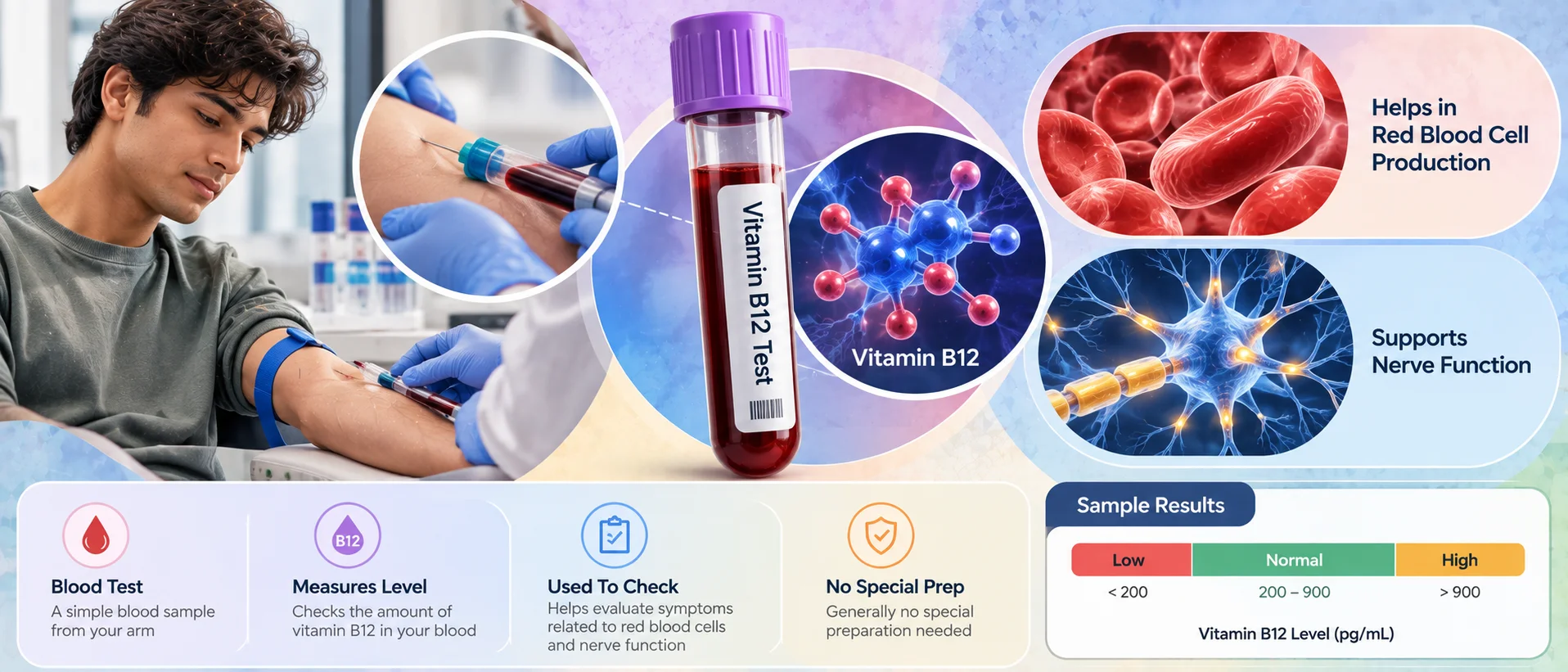
A vitamin B12 test is a blood test that measures the level of vitamin B12 circulating in the bloodstream, a nutrient that plays an important role in nerve function and the production of red blood cells.
What It Checks
The test measures the concentration of vitamin B12 present in a blood sample, giving an indication of whether the body has an adequate supply of this nutrient available for its normal processes.
Why It's Used
Because vitamin B12 is essential for red blood cell production and nervous system function, the test is commonly used as part of general health evaluations, and particularly to investigate symptoms that might relate to red blood cell health or nerve function, given B12's role in both systems.
How It's Done
A vitamin B12 test requires a standard blood sample, typically drawn from a vein in the arm, in the same manner as most routine blood tests. No special preparation is generally required, though a healthcare provider may sometimes advise avoiding certain supplements briefly beforehand to ensure an accurate baseline reading.
Background
Vitamin B12 was identified in the mid-20th century, following decades of research into a severe blood condition that was eventually traced to a deficiency of this specific nutrient, a discovery that also clarified the vitamin's connection to a substance in the digestive tract needed for its absorption. As laboratory methods advanced, direct measurement of B12 levels in blood became a standard, reliable test, replacing earlier, more indirect ways of assessing B12 status, and it remains a routinely available blood test today.