What It Is
Warfarin belongs to a class of medicines called anticoagulants, often referred to in general terms as blood thinners, though it doesn't actually thin the blood in a literal sense.
What It's Used For
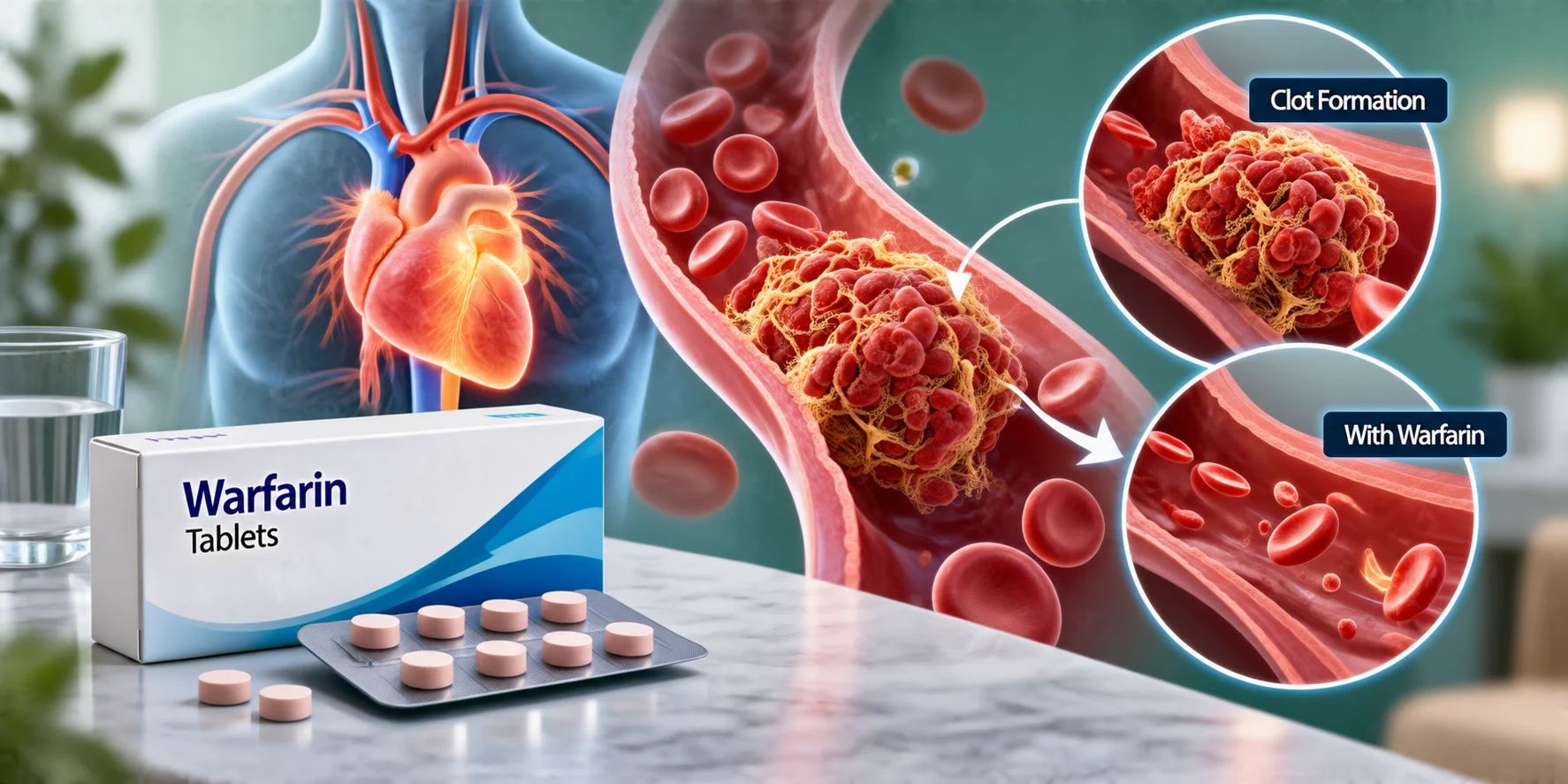
Warfarin is generally used to help prevent and treat blood clots, particularly in conditions where the risk of clot formation is elevated, such as certain heart rhythm disorders and following certain surgical procedures.
How It Works
Warfarin works by interfering with the body's ability to use vitamin K, a nutrient required to produce several proteins, called clotting factors, that are essential for normal blood clotting. By blocking a step in the vitamin K cycle within the liver, warfarin reduces the production of these functional clotting factors, which slows the blood's ability to form clots.
History and Regulatory Status
Warfarin's origins trace back to research in the 1920s and 1930s into a bleeding disorder observed in cattle that had eaten spoiled sweet clover hay, which led researchers to identify the compound responsible. It was initially developed and marketed as a rodenticide in the 1940s before its potential as a human anticoagulant medicine was recognized and pursued. It was approved for clinical use in humans in the 1950s and has remained a widely used anticoagulant for decades since, notable for requiring more individualized monitoring than many newer anticoagulant medicines developed in more recent years. It remains available as a prescription medicine worldwide.