
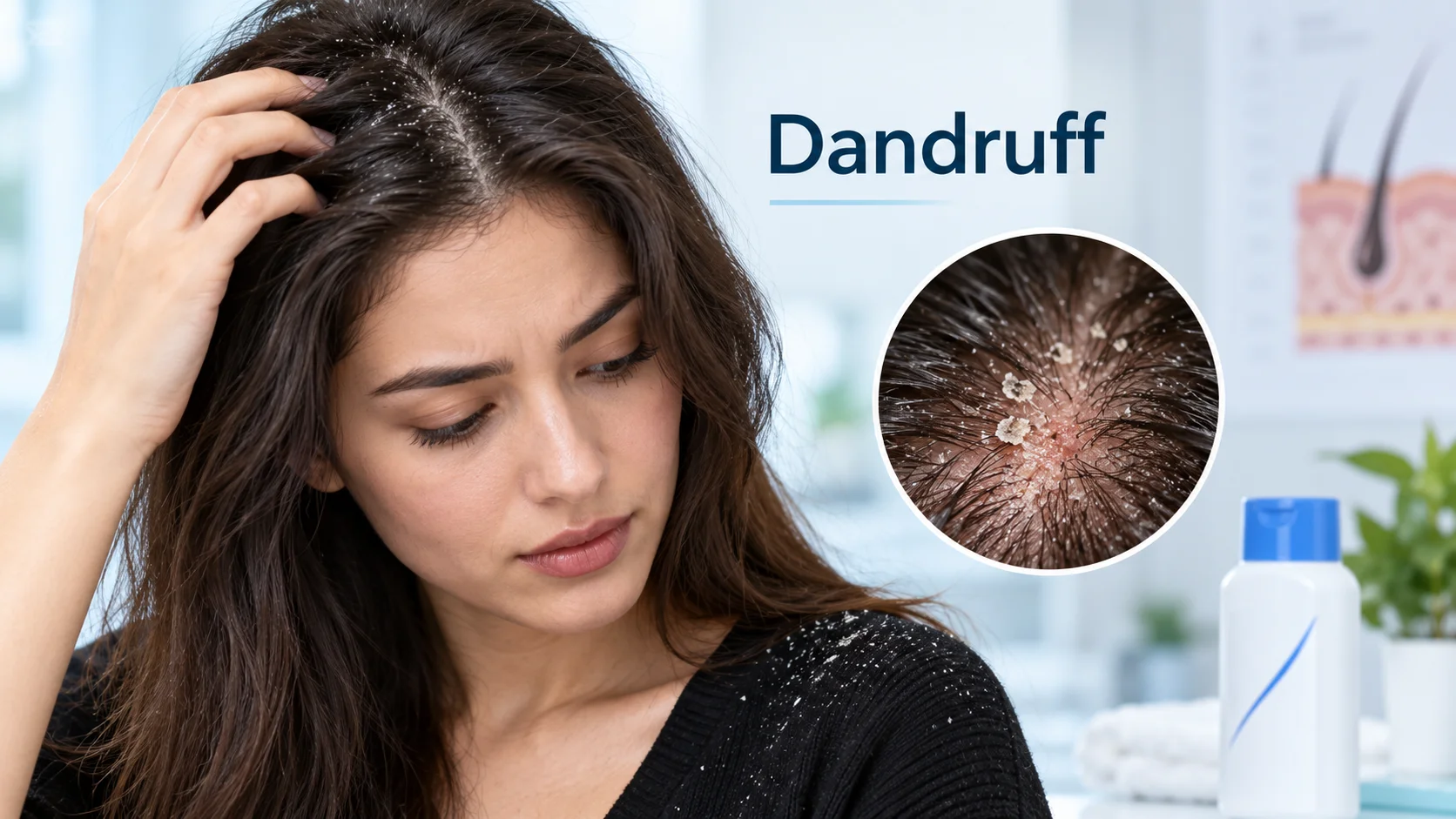
Dandruff is the mildest form of seborrhoeic dermatitis, a condition that can also cause red, greasy and scaly patches on the eyebrows, sides of the nose, behind the ears and on the chest.
This article explains what dandruff is, what causes it, how it is treated, and when to see a doctor.
What Causes Dandruff?
Dandruff usually results from a combination of scalp oil, skin-cell turnover and irritation from a naturally occurring yeast.
Common causes and contributing factors include:
Malassezia yeast: A fungus that normally lives on the scalp. In some people, it irritates the skin and speeds up shedding of skin cells.
Oily scalp: Excess oil feeds the yeast, which is why dandruff often begins after puberty and is more common in men.
Infrequent hair washing: This allows oil and dead skin to build up on the scalp.
Dry skin: This can cause smaller, drier flakes, especially during winter.
Stress, fatigue and illness: These may worsen dandruff or trigger flare-ups.
Hair products: Some dyes, shampoos or styling products may cause irritation or contact dermatitis.
People with Parkinson’s disease, HIV, or a weakened immune system may develop more severe seborrhoeic dermatitis.
Symptoms
Common symptoms of dandruff include:
White or yellowish flakes on the scalp, hair, shoulders or dark clothing
Itchy scalp
Mild redness on the scalp
Greasy or scaly patches on the scalp
Flaking in the eyebrows, beard or around the nose
In babies, dandruff-like scaling may appear as thick yellow crusts on the scalp, known as cradle cap.
Symptoms often become worse in cold, dry weather and during stress, and may improve in warmer months.
Treatment
Dandruff can usually be controlled, but it often returns, so ongoing care is usually needed.
Most cases improve with medicated shampoos available at pharmacies.
Common Shampoo Ingredients
Ketoconazole (1–2%)
An antifungal ingredient and one of the most effective treatments for dandruff.
Zinc Pyrithione
Helps reduce yeast and bacteria on the scalp.
Selenium Sulfide
Slows skin-cell turnover and reduces yeast growth. It may discolour light-coloured or dyed hair.
Ciclopirox
Another antifungal ingredient used in medicated shampoos.
Salicylic Acid
Helps loosen and remove scales from the scalp.
Coal Tar
Slows skin-cell turnover, but has a strong smell and may stain light hair.
How to Use Medicated Shampoo
Massage the shampoo well into the scalp
Leave it on for 3 to 5 minutes
Rinse thoroughly
Use it two to three times a week until dandruff improves
After that, use it once a week or once every two weeks to prevent recurrence
If one shampoo stops working, changing to another active ingredient often helps.
For stubborn cases, a doctor may prescribe:
A mild steroid lotion
A stronger antifungal treatment
Short-term treatment for associated scalp inflammation
Self-Care Tips
These habits can help control dandruff and reduce flare-ups:
Wash hair regularly, especially if the scalp is oily
Avoid leaving heavy oils on the scalp for long periods
Rinse out styling products properly
Manage stress
Get enough sleep
Common Myths About Dandruff
“Dandruff means a dry scalp”
Not usually. Most dandruff is linked to an oily scalp, not dryness.
“Oiling the hair cures dandruff”
Not always. In yeast-related dandruff, oil may actually make the condition worse.
“Dandruff causes permanent hair loss”
Dandruff itself does not cause permanent hair loss, although heavy scratching may lead to temporary shedding.
When to See a Doctor
See a doctor or dermatologist if:
Dandruff does not improve after about a month of using medicated shampoo
The scalp becomes very red, swollen, painful or oozing
Thick scales spread beyond the hairline
There is patchy hair loss
These features may suggest other scalp conditions such as:
Scalp psoriasis
Fungal infection (tinea capitis)
Eczema
These conditions need different treatment.
The Bottom Line
Dandruff is a common and recurring scalp condition that causes flakes and itching, often related to scalp oil and irritation from a naturally occurring yeast.
Although it is not dangerous or contagious, it can be frustrating. Most people can control dandruff well with regular use of medicated shampoos and simple scalp-care habits.