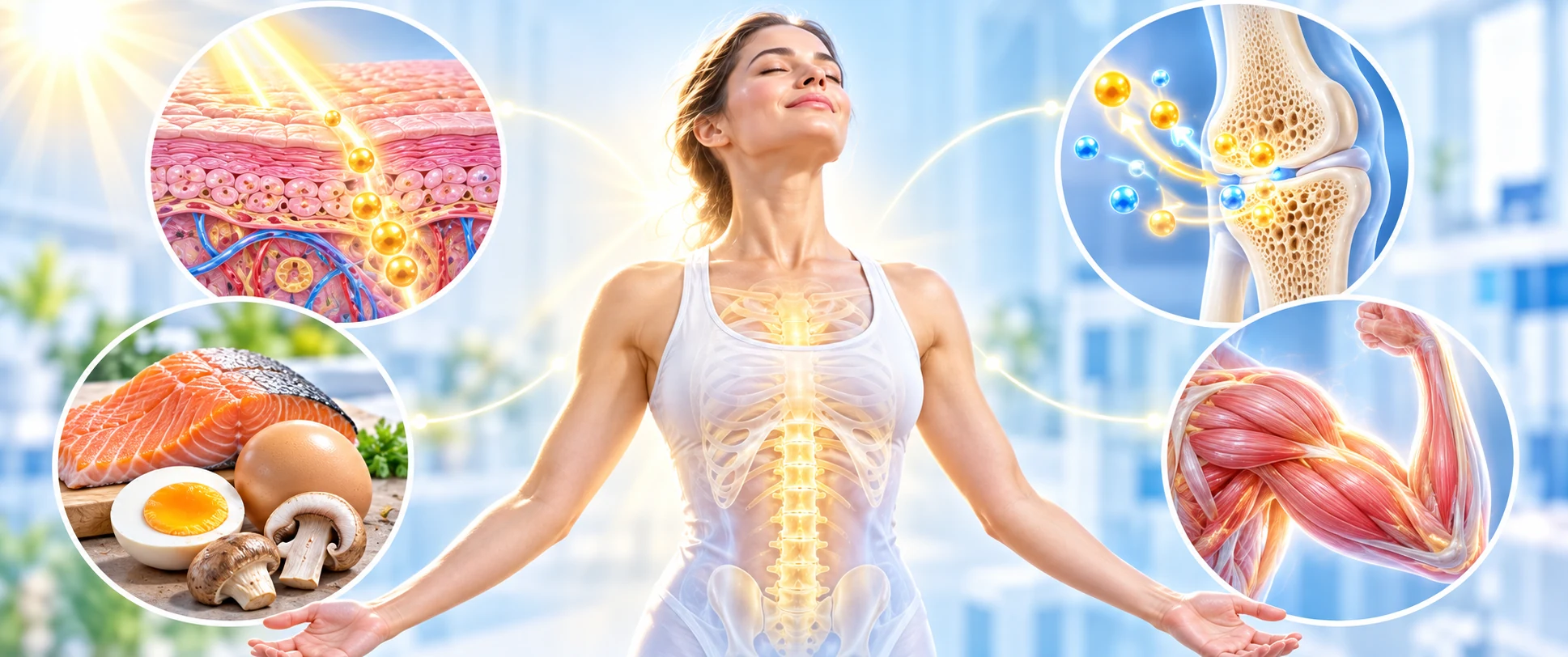
Vitamin D is often called the "sunshine vitamin" because the body can make it when skin is exposed to sunlight. It is unusual among vitamins because it acts more like a hormone, influencing processes throughout the body. Despite this, vitamin D deficiency is one of the most common nutritional deficiencies in the world, including in sunny countries.
How the Body Gets Vitamin D
Vitamin D comes from two main sources.
Sunlight. When ultraviolet B (UVB) rays reach the skin, the body produces vitamin D3 (cholecalciferol). For most people, this is the largest source.
Food and supplements. Vitamin D3 is found in animal foods, while vitamin D2 (ergocalciferol) comes from plants and fungi. Both forms are used in supplements.
Neither form is active on its own. The liver first converts vitamin D into 25-hydroxyvitamin D, the form measured in blood tests. The kidneys then convert it into calcitriol, the active form the body uses.
What Vitamin D Does
It builds and protects bones. Vitamin D helps the intestines absorb calcium and phosphate from food. Without enough of it, the body absorbs only a fraction of the calcium it takes in and pulls calcium from the bones instead, weakening them over time.
It supports muscle function. Adequate vitamin D helps muscles work properly. Low levels are linked to muscle weakness and, in older adults, a higher risk of falls.
It plays a role in immunity. Immune cells have vitamin D receptors, and vitamin D helps regulate how they respond to infection and inflammation.
Researchers have also studied links between vitamin D and heart disease, diabetes, cancer and depression. Large clinical trials have generally found that taking supplements does not prevent these conditions in people who already have adequate levels. The clearest benefits of vitamin D remain those related to bones and muscles.
- Vitamin D Deficiency
- Who Is at Risk
Several factors raise the risk of deficiency:
- spending little time outdoors, or covering most of the skin when outside
- darker skin, which contains more melanin and produces less vitamin D from the same sun exposure
- older age, as the skin makes vitamin D less efficiently
- obesity, since vitamin D is stored in fat tissue and is less available to the body
- conditions that affect fat absorption, such as coeliac disease, Crohn's disease or some types of weight-loss surgery
- chronic kidney or liver disease, which interfere with converting vitamin D into its active form
- exclusively breastfed infants, because breast milk contains little vitamin D
- certain medications, including some anti-seizure drugs and long-term steroids
- Symptoms
Many people with low vitamin D have no symptoms at all, which is why deficiency often goes unnoticed. When symptoms do appear, they may include:
- tiredness
- bone pain or aches, particularly in the lower back, hips or legs
- muscle weakness, aches or cramps
- frequent infections
- Complications
In children, severe deficiency causes rickets, in which bones become soft and may bend, leading to bowed legs, delayed growth and skeletal deformities.
In adults, it causes osteomalacia, a softening of the bones that leads to bone pain and muscle weakness. Long-term low vitamin D also contributes to osteoporosis, increasing the risk of fractures, especially in older adults.
Diagnosis
Vitamin D status is checked with a blood test measuring 25-hydroxyvitamin D. Cut-off values vary between guidelines, but levels below about 12 ng/mL (30 nmol/L) are widely considered deficient, and many experts regard levels below 20 ng/mL (50 nmol/L) as inadequate for bone health. Routine testing is not recommended for everyone; doctors usually test people with symptoms or risk factors.
Prevention and Treatment
Sensible sun exposure. Short periods of sun on the arms and face can help the body produce vitamin D. The amount needed depends on skin tone, location, season and time of day. It should be balanced against the risk of sunburn and skin cancer.
Diet. Good food sources include oily fish such as salmon, sardines and mackerel, cod liver oil, egg yolks, mushrooms exposed to UV light, and foods fortified with vitamin D such as some milks, cereals and cooking oils. Few foods are naturally rich in vitamin D, so diet alone often isn't enough.
Supplements. Many health authorities recommend supplements for people at higher risk, including infants, older adults and those with little sun exposure. People diagnosed with deficiency may be prescribed higher doses for a period, followed by a maintenance dose. Doses for treating deficiency should be set by a doctor.
Can You Have Too Much?
Yes. Sunlight cannot cause vitamin D toxicity, but taking very high-dose supplements for long periods can. Excess vitamin D raises calcium levels in the blood, which can cause nausea, vomiting, weakness, confusion, excessive thirst and kidney stones. In severe cases, it can damage the kidneys and heart. For this reason, high-dose supplements should only be taken under medical supervision.
The Bottom Line
Vitamin D is essential for strong bones and healthy muscles, yet deficiency is common and often silent. People with risk factors, or with symptoms such as bone pain and muscle weakness, should talk to their doctor about testing. Sensible sun exposure, a varied diet and supplements when needed can keep levels where they should be.