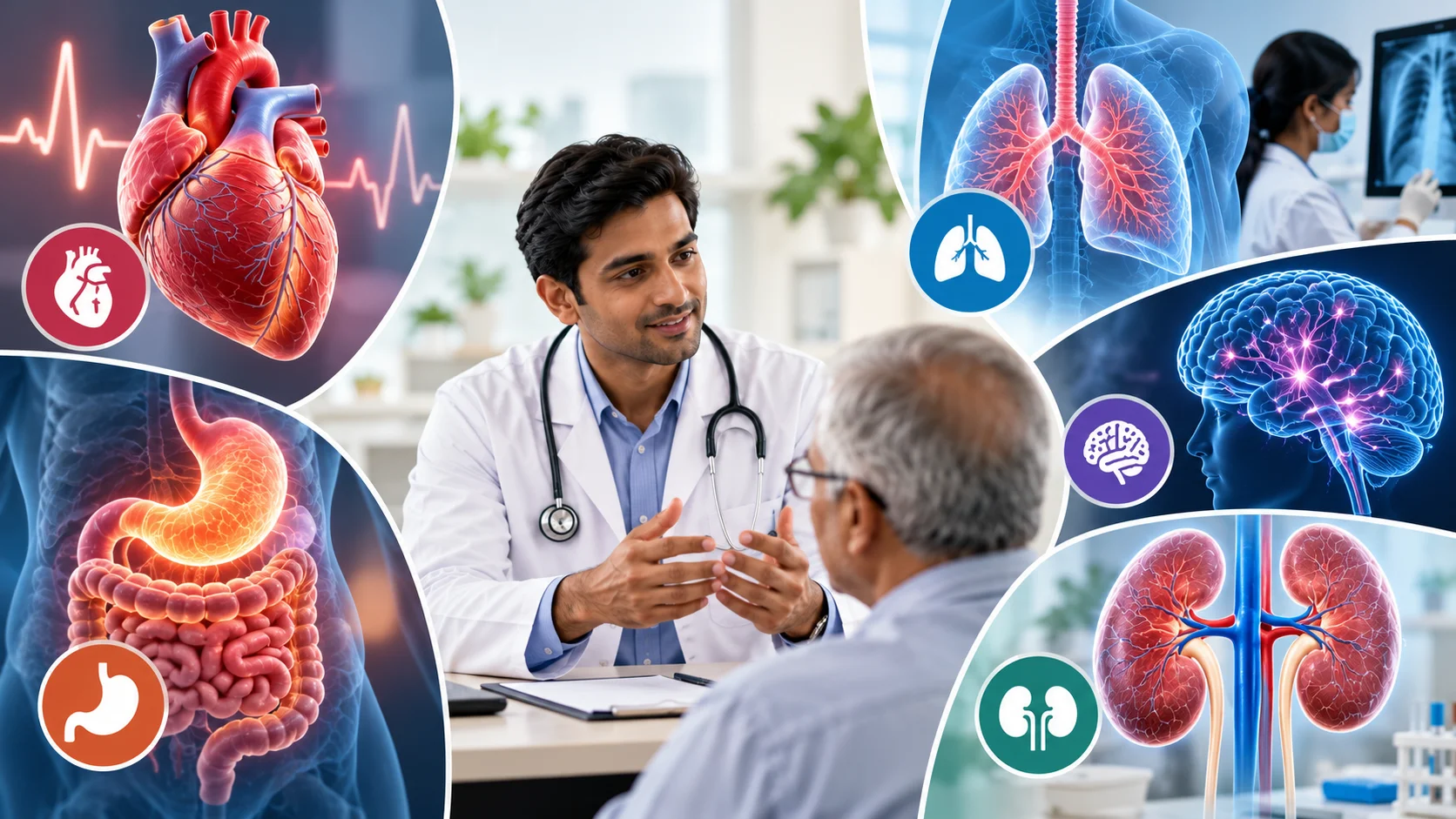
Medicine is divided into disciplines, or specialties, each focusing on a body system, a patient group or a type of care. A specialist first completes a basic medical degree (MBBS in India and the UK) and then trains for several more years in one field, usually through a postgraduate degree such as an MD, MS or DNB.
The 29 entries below cover the main specialties, grouped as medical, surgical, women's and children's health and mental health, and diagnostic and supporting disciplines. Each entry gives a short description, the specialist's title and common conditions or procedures, ready to adapt as a Medinall page.
Medical Specialties
General Medicine (Internal Medicine)
General medicine deals with the diagnosis and non-surgical treatment of diseases in adults, often involving several organ systems at once. The physician is frequently the first specialist a patient sees and coordinates care with other specialists.
Specialist: Physician (internist)
Common conditions: fever, diabetes, hypertension, infections, anaemia, multi-system illness
Cardiology
Cardiology covers the heart and blood vessels. Cardiologists diagnose and manage heart disease with medicines, tests and minimally invasive procedures, while open-heart surgery is the field of cardiothoracic surgeons.
Specialist: Cardiologist
Common conditions and procedures: coronary artery disease, heart attack, heart failure, arrhythmias, valve disease; ECG, echocardiography, angiography, angioplasty and stenting, pacemakers
Pulmonology (Respiratory Medicine)
Pulmonology focuses on the lungs and airways. It includes long-term breathing disorders, lung infections and sleep-related breathing problems.
Specialist: Pulmonologist (chest physician)
Common conditions and procedures: asthma, COPD, tuberculosis, pneumonia, interstitial lung disease, sleep apnoea; spirometry, bronchoscopy
Gastroenterology
Gastroenterology deals with the digestive system, from the oesophagus to the rectum, together with the liver, gallbladder and pancreas. Hepatology, the study of the liver, is a closely related sub-specialty.
Specialist: Gastroenterologist
Common conditions and procedures: acid reflux, peptic ulcer, irritable bowel syndrome, inflammatory bowel disease, hepatitis, cirrhosis, pancreatitis; endoscopy, colonoscopy
Nephrology
Nephrology concerns the kidneys and their role in filtering blood and balancing fluids, salts and blood pressure. Nephrologists manage kidney disease medically and oversee dialysis and transplant care.
Specialist: Nephrologist
Common conditions and procedures: chronic kidney disease, acute kidney injury, nephrotic syndrome, electrolyte disorders; haemodialysis, peritoneal dialysis, kidney transplant follow-up
Endocrinology
Endocrinology deals with hormones and the glands that produce them, such as the thyroid, pituitary, adrenal glands and pancreas. Many endocrine disorders are long-term and need regular monitoring.
Specialist: Endocrinologist
Common conditions: diabetes, thyroid disorders, obesity, osteoporosis, polycystic ovary syndrome (PCOS), growth and pituitary disorders
Neurology
Neurology covers disorders of the brain, spinal cord, nerves and muscles. Neurologists treat these conditions medically; operations are performed by neurosurgeons.
Specialist: Neurologist
Common conditions and procedures: stroke, epilepsy, migraine, Parkinson's disease, dementia, multiple sclerosis, neuropathy; EEG, nerve conduction studies
Rheumatology
Rheumatology deals with autoimmune and inflammatory conditions affecting the joints, muscles and connective tissues. Many of these conditions are chronic and are managed with long-term medication.
Specialist: Rheumatologist
Common conditions: rheumatoid arthritis, osteoarthritis, gout, lupus (SLE), ankylosing spondylitis, vasculitis
Infectious Diseases
This specialty focuses on infections caused by bacteria, viruses, fungi and parasites. It also covers infection control in hospitals and the responsible use of antibiotics.
Specialist: Infectious diseases specialist
Common conditions: HIV, tuberculosis, dengue, malaria, typhoid, hospital-acquired and drug-resistant infections
Haematology
Haematology concerns the blood, bone marrow and lymphatic system. It covers both non-cancerous blood disorders and blood cancers.
Specialist: Haematologist
Common conditions and procedures: anaemia, thalassaemia, sickle cell disease, haemophilia, clotting disorders, leukaemia, lymphoma; bone marrow biopsy, bone marrow transplant
Oncology
Oncology is the diagnosis and treatment of cancer. It is usually divided into medical oncology (chemotherapy, targeted and immunotherapy), radiation oncology and surgical oncology, with teams often planning treatment together.
Specialist: Oncologist
Common conditions: breast, lung, oral, cervical, colorectal and prostate cancers, among others
Dermatology
Dermatology deals with the skin, hair and nails. It includes medical, surgical and cosmetic care.
Specialist: Dermatologist
Common conditions and procedures: acne, eczema, psoriasis, fungal infections, vitiligo, hair loss, skin cancer; skin biopsy, laser treatment
Surgical Specialties
General Surgery
General surgery covers operations on the abdomen and its organs, the breast, thyroid, skin and soft tissues, and the management of surgical emergencies. Many procedures are now performed laparoscopically (keyhole surgery).
Specialist: General surgeon
Common procedures: appendicectomy, hernia repair, gallbladder removal (cholecystectomy), thyroid surgery, breast surgery, treatment of abdominal trauma
Orthopaedics
Orthopaedics deals with bones, joints, ligaments, tendons and the spine. It includes fracture care, sports injuries and joint replacement.
Specialist: Orthopaedic surgeon
Common conditions and procedures: fractures, arthritis, slipped disc, ligament tears, osteoporotic fractures; knee and hip replacement, arthroscopy, spinal surgery
Neurosurgery
Neurosurgery is the surgical treatment of the brain, spinal cord and nerves. Neurosurgeons work closely with neurologists and intensive care teams.
Specialist: Neurosurgeon
Common conditions: head injury, brain tumours, brain haemorrhage, aneurysms, hydrocephalus, spinal cord compression, slipped disc
Cardiothoracic Surgery (CTVS)
Cardiothoracic surgery covers operations on the heart, lungs, major blood vessels and chest wall. In India it is often called cardiothoracic and vascular surgery (CTVS).
Specialist: Cardiothoracic surgeon
Common procedures: coronary artery bypass grafting (CABG), valve repair and replacement, congenital heart surgery, lung resection, heart and lung transplant
Urology
Urology deals with the urinary tract in both sexes and the male reproductive organs. Andrology, the study of male fertility and sexual health, is a related sub-specialty.
Specialist: Urologist
Common conditions and procedures: kidney stones, enlarged prostate, prostate and bladder cancer, urinary incontinence, male infertility, varicocele; cystoscopy, TURP, lithotripsy
Plastic Surgery
Plastic surgery restores form and function to the body. It includes reconstructive surgery after injury, burns, cancer or birth defects, and cosmetic (aesthetic) surgery.
Specialist: Plastic surgeon
Common procedures: burns care and skin grafting, cleft lip and palate repair, hand surgery, breast reconstruction, microsurgery, cosmetic procedures
ENT (Otorhinolaryngology)
ENT covers the ear, nose and throat, as well as related structures of the head and neck. It includes both medical and surgical care.
Specialist: ENT surgeon (otorhinolaryngologist)
Common conditions and procedures: ear infections, hearing loss, sinusitis, tonsillitis, nasal polyps, voice disorders, head and neck cancers; tonsillectomy, sinus surgery, cochlear implants
Ophthalmology
Ophthalmology is the medical and surgical care of the eye and vision.
Specialist: Ophthalmologist
Common conditions and procedures: cataract, glaucoma, refractive errors, diabetic retinopathy, retinal detachment, squint; cataract surgery, LASIK, retinal laser treatment
Women's and Children's Health and Mental Health
Obstetrics and Gynaecology (OBG)
Obstetrics covers pregnancy, childbirth and the period after delivery. Gynaecology deals with the health of the female reproductive system. Reproductive medicine, including IVF, is a related sub-specialty.
Specialist: Obstetrician and gynaecologist
Common conditions and procedures: antenatal care, high-risk pregnancy, normal and caesarean delivery, menstrual disorders, PCOS, fibroids, endometriosis, infertility, menopause, cervical cancer screening
Paediatrics
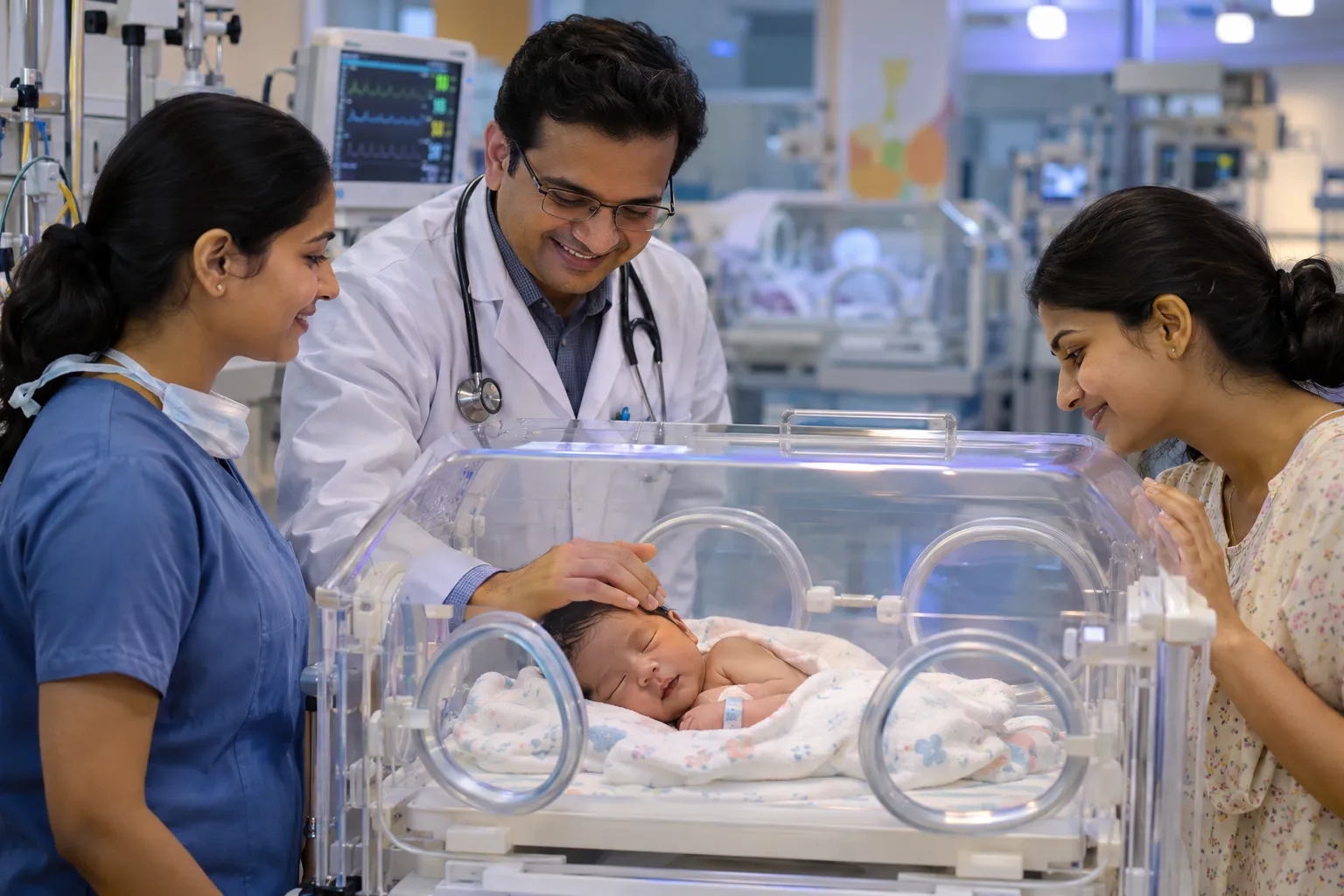
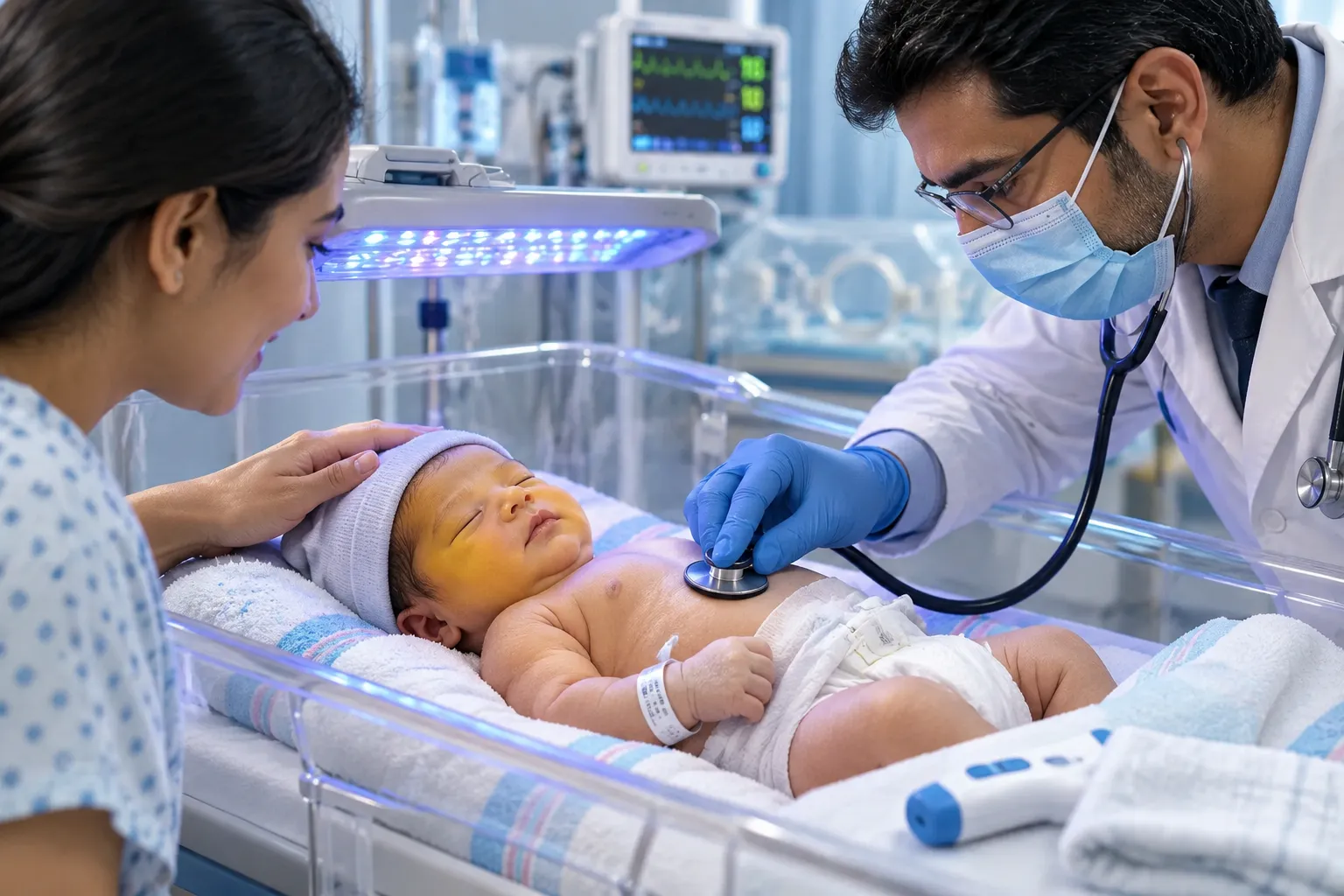
Paediatrics is the medical care of infants, children and adolescents, usually up to the age of 18. It includes growth and development, vaccination and childhood illness. Neonatology, the care of newborns, is a major sub-specialty.
Specialist: Paediatrician
Common conditions: childhood infections, diarrhoea and dehydration, asthma, malnutrition, developmental delay, newborn jaundice, prematurity
Psychiatry
Psychiatry is the branch of medicine that diagnoses and treats mental, emotional and behavioural disorders. Psychiatrists are medical doctors who can prescribe medication, and they often work alongside clinical psychologists, who provide assessment and talking therapies.
Specialist: Psychiatrist
Common conditions: depression, anxiety disorders, bipolar disorder, schizophrenia, obsessive-compulsive disorder, substance use disorders, dementia-related behavioural problems
Diagnostic, Acute and Supporting Disciplines
Radiology
Radiology uses medical imaging to diagnose disease and guide treatment. Interventional radiology, a growing sub-specialty, performs minimally invasive procedures under imaging guidance.
Specialist: Radiologist
Common tests and procedures: X-ray, ultrasound, CT, MRI, mammography; image-guided biopsy, drainage, angiography and embolisation
Pathology
Pathology is the study of disease through the laboratory examination of tissues, cells and body fluids. Pathologists rarely see patients, but their reports underpin most diagnoses, including cancer.
Specialist: Pathologist
Main branches and tests: histopathology (biopsies), cytology (including Pap smears), haematology, clinical biochemistry, microbiology, blood banking (transfusion medicine)
Anaesthesiology
Anaesthesiology provides anaesthesia and pain relief during surgery and procedures, and monitors the patient's vital functions throughout. Anaesthesiologists also work in intensive care, pain management and resuscitation.
Specialist: Anaesthesiologist (anaesthetist)
Common procedures: general anaesthesia, spinal and epidural anaesthesia, nerve blocks, sedation, airway management, chronic pain management
Emergency Medicine
Emergency medicine provides immediate assessment and treatment of sudden illness and injury. Emergency physicians stabilise patients and decide who needs admission, surgery or intensive care.
Specialist: Emergency physician
Common conditions: chest pain and heart attack, stroke, trauma, poisoning, severe infections and sepsis, breathing difficulty, cardiac arrest
Forensic Medicine
Forensic medicine applies medical knowledge to legal questions. Forensic experts perform post-mortem examinations, establish the cause and time of death, and give expert evidence in court.
Specialist: Forensic medicine expert (forensic pathologist)
Common work: autopsies, injury reports, age estimation, examination in sexual assault and medico-legal cases, toxicology, identification of human remains
Community Medicine (Public Health)
Community medicine focuses on the health of populations rather than individual patients. It covers disease prevention, health promotion and the planning of health services.
Specialist: Community medicine specialist (public health physician)
Main areas: epidemiology, vaccination programmes, maternal and child health, control of communicable and non-communicable diseases, nutrition, sanitation, health policy