Psoriasis can occur at any age, although it often begins between the ages of 15 and 35. It is not contagious. There is currently no cure, but effective treatments can control symptoms, reduce flares and improve quality of life.
Types of Psoriasis
Plaque Psoriasis
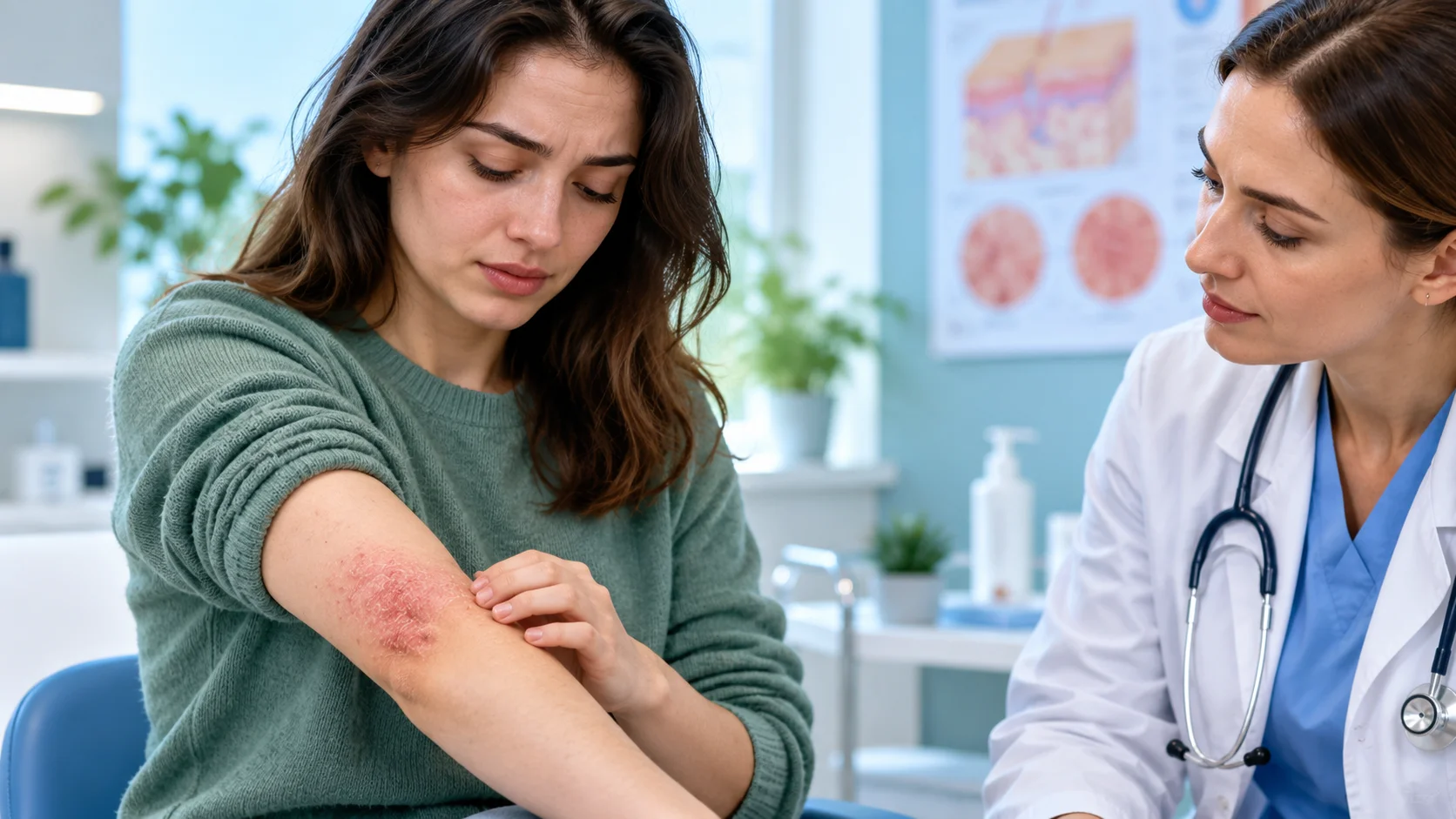
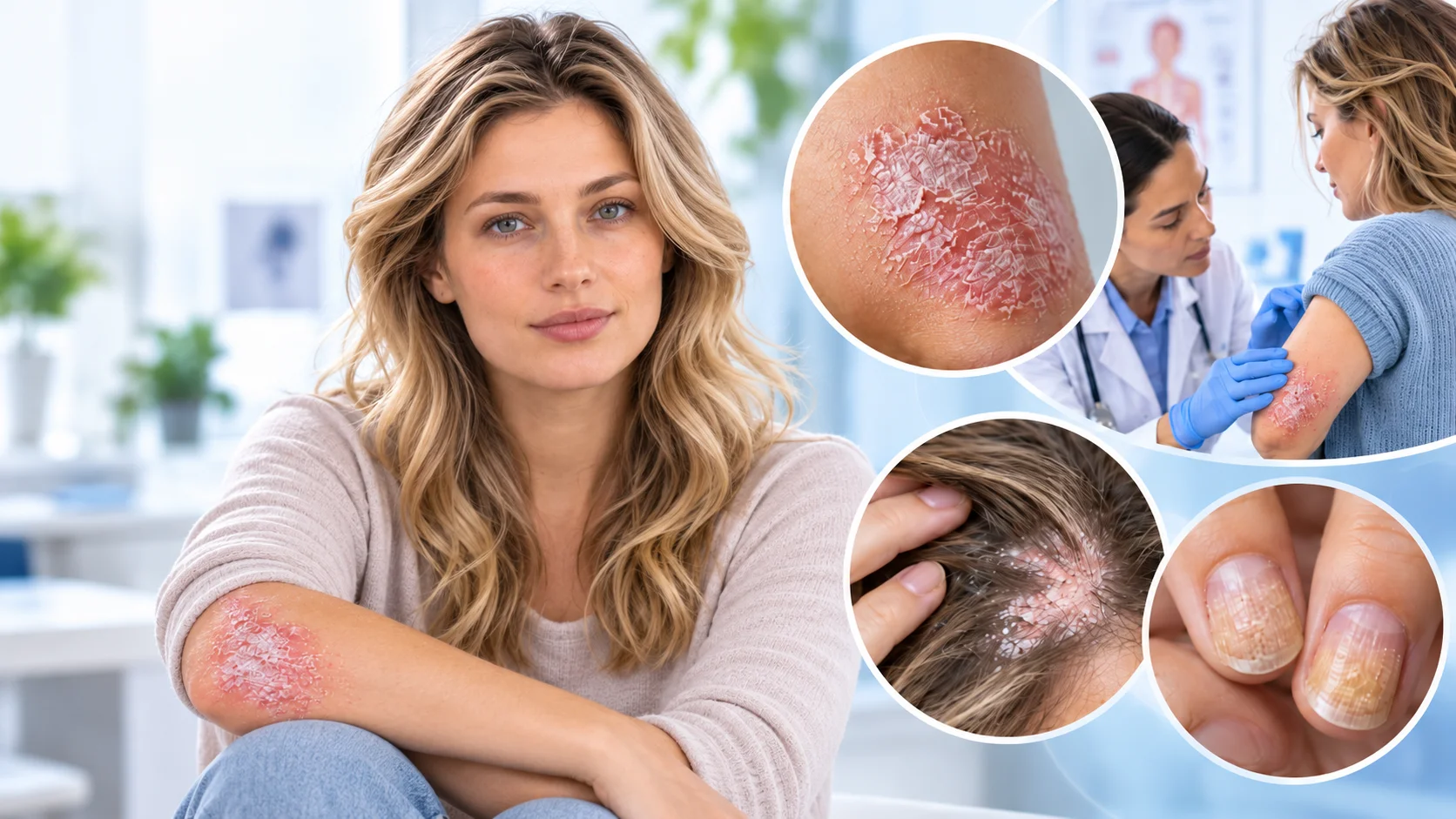
Plaque psoriasis is the most common form, accounting for around 80 to 90 percent of cases. It causes raised, red patches covered with silvery-white scales, commonly affecting the:
Elbows
Knees
Scalp
Lower back
Guttate Psoriasis
Guttate psoriasis causes small, drop-shaped spots on the skin. It is more common in children and young adults and may develop after an infection such as streptococcal throat infection.
Inverse Psoriasis
Inverse psoriasis causes smooth, red patches in areas where skin folds together, including:
Armpits
Groin
Under the breasts
Pustular Psoriasis
This type causes pus-filled bumps on red or inflamed skin, commonly affecting the palms of the hands and soles of the feet.
Erythrodermic Psoriasis
Erythrodermic psoriasis is a rare but severe form that causes widespread redness and inflammation across much of the body. It requires urgent medical care.
Causes and Triggers
Psoriasis develops because of an overactive immune system combined with a genetic tendency.
Around one in three people with psoriasis has a family member with the condition.
Common triggers that may cause psoriasis to appear or flare include:
Stress
Infections, particularly streptococcal throat infections
Cuts, scratches and other skin injuries
Sunburn
Cold and dry weather
Smoking
Heavy alcohol consumption
Obesity
Certain medicines, including lithium, beta-blockers and some antimalarial medicines
Abrupt withdrawal of oral corticosteroids
Skin injury can sometimes trigger new psoriasis patches at the injured area.
Symptoms
Symptoms vary depending on the type and severity of psoriasis.
Common symptoms include:
Red, raised skin patches
Silvery-white scales
Itching
Burning or soreness
Dry or cracked skin that may bleed
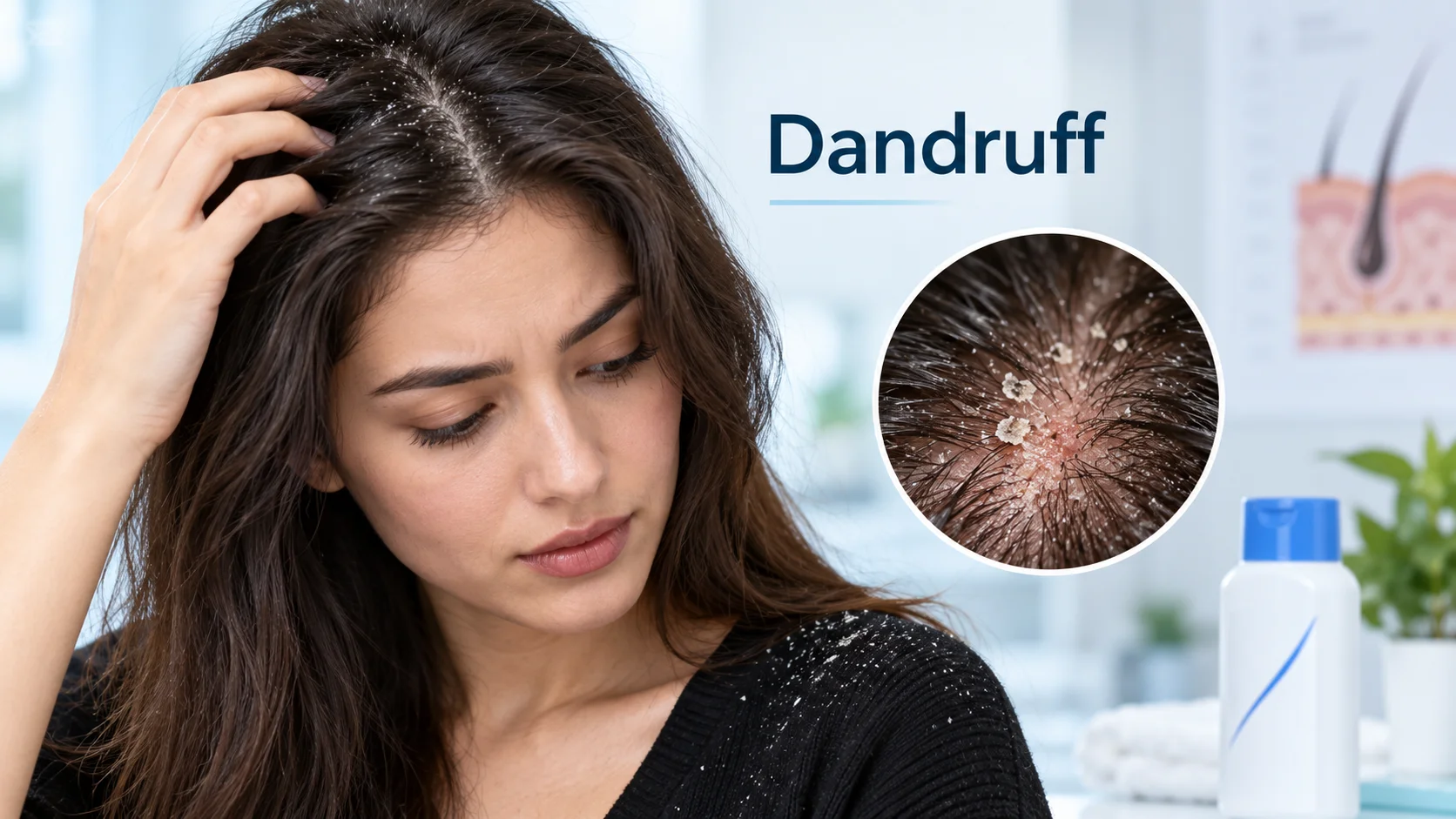
Scalp scaling that can resemble severe dandruff
Nail pitting
Thickened or discoloured nails
Separation of the nail from the nail bed
Psoriasis often follows a pattern of flares and quieter periods, with active symptoms lasting weeks or months.
Psoriatic Arthritis
Up to 30 percent of people with psoriasis may develop psoriatic arthritis.
This can cause:
Joint pain
Stiffness
Swelling
Swelling of an entire finger or toe
Early diagnosis and treatment are important because untreated inflammation can lead to permanent joint damage.
Psoriasis is also associated with an increased risk of conditions including:
Heart disease
Diabetes
Obesity
Depression
Diagnosis
A dermatologist can usually diagnose psoriasis by examining the:
Skin
Scalp
Nails
A skin biopsy may occasionally be performed to rule out other conditions such as:
Eczema
Fungal infections
Lichen planus
People with joint symptoms may also need X-rays and blood tests to investigate possible psoriatic arthritis.
Treatment
Treatment depends on the type of psoriasis, its severity and the areas of the body affected.
Topical Treatments
Mild psoriasis may be managed with treatments applied directly to the skin, including:
Moisturisers
Corticosteroid creams
Vitamin D analogues such as calcipotriol
Salicylic acid
Coal tar
Calcineurin inhibitors for sensitive areas such as the face and skin folds
Phototherapy
Phototherapy uses controlled exposure to narrowband UVB light.
Treatment is generally provided in a clinic several times per week.
Oral Medicines
Moderate to severe psoriasis may require medicines such as:
Methotrexate
Cyclosporine
Acitretin
Apremilast
Some of these treatments require regular blood monitoring.
Biologic Medicines
Biologic therapies target specific parts of the immune system involved in psoriasis.
Examples include:
Adalimumab
Secukinumab
Ixekizumab
Ustekinumab
Guselkumab
These medicines can be highly effective for severe psoriasis and psoriatic arthritis.
Oral corticosteroids are generally avoided because suddenly stopping them can trigger a severe flare.
Living With Psoriasis
Daily skin care and lifestyle measures can help reduce symptoms and flares.
People with psoriasis may benefit from:
Moisturising every day
Applying moisturiser after bathing
Using lukewarm rather than very hot water
Avoiding scratching or picking at patches
Avoiding sunburn
Quitting smoking
Limiting alcohol
Maintaining a healthy weight
Managing stress
Brief and sensible sun exposure may improve symptoms in some people, although excessive exposure and sunburn can worsen psoriasis.
Because visible skin disease can affect confidence and emotional wellbeing, counselling and support groups may also be helpful.
When to See a Doctor
See a healthcare professional if:
A rash persists or continues to spread
Skin symptoms cause significant discomfort
Symptoms do not improve with moisturisers or basic skin care
Joint pain, stiffness or swelling develops
Seek urgent medical attention if:
Redness and scaling affect most of the body
Widespread pus-filled bumps develop with fever
The Bottom Line
Psoriasis is a chronic immune-mediated condition that affects the skin and, in some people, the joints. Although it cannot currently be cured, modern topical treatments, phototherapy, oral medicines and biologic therapies can control the condition effectively.
Early treatment, good skin care and management of triggers can reduce flares and help prevent complications such as psoriatic arthritis.